
Komodo’s 25-year plan framed communities as key partners in conservation
A 2002 Environmental Assessment Study and related management documents describe a 25-year collaborative management framework for Komodo National Park, with community participation and tourism revenues central to its design.
By Mukmin John
Editor: Mursyid Sonsang
· Event date: · 5 min read
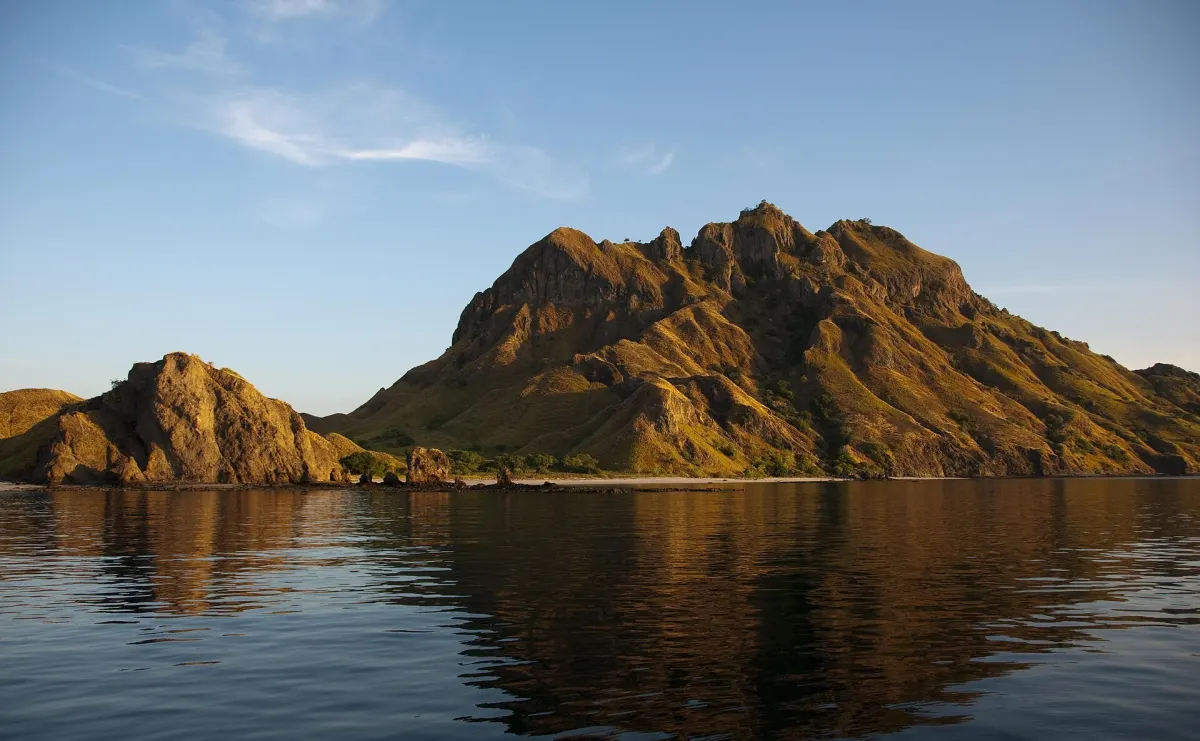
Labuan Bajo — — A 25-year management plan for Komodo National Park set out a framework for collaborative management, community participation and sustainable tourism in the late 1990s and early 2000s, according to an Environmental Assessment Study prepared in October 2002 and related management documents from the park authority and The Nature Conservancy. The available material describes proposed and endorsed mechanisms for shared management but does not by itself establish which community regulations or enforcement roles are in effect today.
The Environmental Assessment Study for Komodo National Park was prepared in October 2002 by Jim Singleton, Rini Sulaiman and staff of The Nature Conservancy’s Southeast Asia Center for Marine Protected Areas. According to the document, it assessed the Komodo Collaborative Management Initiative (KCMI), a project intended to support long-term park management through cooperation among government agencies, local government, a tourism joint venture and local communities.
The assessment and related reports describe a collaborative approach involving the park authority (then PKA/PHKA), local governments, The Nature Conservancy, a local tourism partner and community representatives. They indicate that the initiative was designed to integrate conservation, tourism development, alternative livelihoods, and monitoring and evaluation within a single management framework for the park.
For tourism operators and visitors, these documents are significant because they link the credibility of conservation outcomes to how responsibilities and decisions are shared among the state, private partners and communities. However, they are historical planning and assessment texts from around 2000–2002, not evidence that every mechanism they describe was subsequently implemented or remains active in 2026.
What the 25-year plan and assessment set out
Management reports from Komodo National Park state that a 25-year master plan for park management was developed with assistance from The Nature Conservancy between roughly 1995 and 2000, and approved by Indonesia’s Directorate General for Protection and Nature Conservation in mid-2000.
The World Heritage datasheet compiled for Komodo National Park notes that a 25-year management plan was inaugurated in 2000 to be implemented in five-year segments, with zonation including core, wilderness, tourism use, traditional use, pelagic use, research and training, and traditional settlement zones.
According to the Environmental Assessment Study cited in park documents, collaborative management was presented as a way to involve stakeholder groups directly in managing the park, with mitigation measures and continued attention required for conservation management, tourism management and sustainable financing, alternative livelihoods, and monitoring and evaluation.
Annex material describing the 25-year master plan says that borders and zonation for Komodo National Park were redesigned based on ecological data, conservation principles, socio-economic and cultural needs of local communities, and feasibility, and that the plan listed permitted and prohibited activities for each zone.
The same sources link tourism revenues to the park’s financial future. User fees and other tourism income were expected to cover park operating costs over time, with KCMI and related funding providing bridge financing for conservation and tourism investments during the project period and a goal of making the park self-financing by the end of the seven-year project.
Community participation as a planning principle
The collaborative framework described in the assessment and World Heritage documentation identifies local communities as key participants, alongside national and local government and private tourism partners.
Consultation processes in the Komodo management program included stakeholder consultations from 1996 to 2003, according to an overview report cited on the park’s website, with community involvement referenced in the development of zonation and management measures.
These texts show that community participation and consultation were built into the architecture of the 25-year plan and the KCMI project design. They do not, on their own, specify the current form of village regulations, the exact decision-making powers of communities, or whether residents hold formal authority to patrol, investigate violations or impose sanctions under present-day law.
Context and timeline
Komodo National Park was formally established as a national park by ministerial decree in March 1980, initially covering about 72,000 hectares before being extended to around 219,322 hectares in 1984 to include a wider marine area and sections of mainland Flores.
The area was accepted as a UNESCO Man and the Biosphere Reserve in January 1977, predating the creation of the national park, and was inscribed on the UNESCO World Heritage List in 1991 for its outstanding natural beauty and biodiversity.
According to park and advisory body documents, the government’s management planning process for the 25-year plan ran through the late 1990s, with endorsement of the plan and its zoning system around 2000 and subsequent implementation in stages.
The Environmental Assessment Study was completed in October 2002 as part of this broader Komodo Collaborative Management Initiative. Together, these materials show that community participation and collaborative management were central principles in the park’s long-term planning, but they do not provide up-to-date evidence on how those provisions operate today.
Sources
- Environmental Assessment Study – Komodo National Park (PDF hosted on komodonationalpark.org)
- Komodo National Park – World Heritage Datasheet (UNEP-WCMC)
- Komodo National Park – UNESCO World Heritage listing
- Komodo Dragon Scientific Expeditions 1910–Present – Komodo Guide
- Komodo National Park – Wikipedia
- Progress Report on The Nature Conservancy’s Komodo Marine Conservation Project (closeout report excerpt)
- Reconciling Nature and Culture in a Global World (PDF chapter referencing Komodo EAS)
- Annex on 25-Year Master Plan for Komodo National Park (ENACA document)
- Environmental Assessment Study – Komodo National Park
Next story

BMKG Warns of 3.5m Waves off South Sumba Through 19 September
Indonesia’s BMKG maritime station in Kupang warns of moderate to high waves across key Nusa Tenggara Timur routes from 17 to 20 September 2026, with t…
Related