
Why young Komodo dragons spend their first months in trees
Young Komodo dragons use trees as refuge from adult dragons and other predators. The age at which they move to the ground varies by source, but both agree the shift depends on growth and development.
Editor: Mursyid Sonsang
· 3 min read
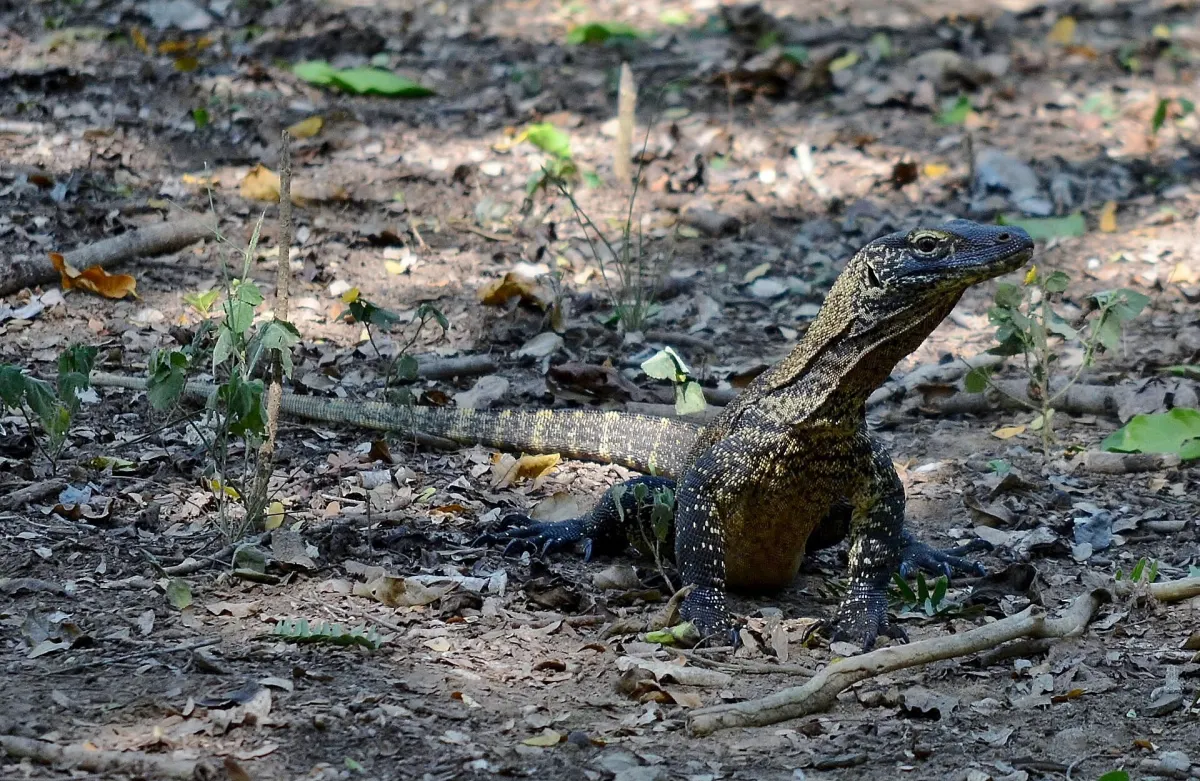
Labuan Bajo — Young Komodo dragons climb into trees soon after hatching, using the canopy as shelter from adult dragons and other predators. Animal Diversity Web says the juveniles stay arboreal in forested areas until about eight months old, while the San Diego Zoo says they spend their early years in trees and begin ground life when they are about four years old and 1.2 metres long.
The two accounts point to the same broad pattern: very young Komodo dragons rely on height and cover, then shift toward the ground as they grow. But they do not give one universal timetable for every wild animal.
Komodo dragons (Varanus komodoensis) are found only in Indonesia’s Lesser Sunda Islands, including Komodo, Rinca, Flores and Padar, according to Animal Diversity Web. Adults are terrestrial and dominate feeding sites on the ground, while juveniles are associated with trees and forested habitat.
Trees as protection
Newly hatched Komodo dragons are tiny compared with adults and face danger from larger members of their own species, as well as birds and other predators. Animal Diversity Web says hatchlings are about 37 centimetres long and that young dragons live in trees to avoid predation by older dragons.
The San Diego Zoo similarly says hatchlings are about 37 centimetres long and immediately climb nearby trees to escape adult dragons and other predators. It adds that young Komodos eat whatever prey fits into their mouth, including eggs, grasshoppers, beetles and geckos.
That tree life also shapes how juveniles feed. Animal Diversity Web says young dragons eat grasshoppers, beetles, small geckos, eggs, birds and eventually small mammals. The juveniles can wait in the canopy and descend only when it is safer to do so.
Growth changes the timetable
Animal Diversity Web says young dragons become too large to remain arboreal at about eight months, at which point they alter their diet and become terrestrial. The San Diego Zoo gives a later size benchmark, saying dragons begin ground life at about four years old and 1.2 metres in length.
The difference suggests that size and development matter more than age alone. The sources agree on the main trend, but they describe different milestones for the transition from tree-dwelling to ground-dwelling life.
Komodo dragons hatch from eggs laid in ground nests, and the females may guard the nest during incubation. After hatching, however, the young are on their own and must rely on climbing and concealment to survive.
For visitors, the practical takeaway is simple: a young Komodo dragon in a tree is not there by accident. It is using the only part of the habitat where its smaller body gives it a chance to avoid adults and other threats while it grows into a more terrestrial predator.
Sources
Next story
Komodo National Park reefs host more than 1,000 fish species, sources say
Komodo National Park sits inside the Coral Triangle, where UNESCO and WWF say its waters hold more than 1,000 fish species and more than 260 coral spe…
Related