

Baby Komodo dragon: size, diet, and why hatchlings live in trees
Baby Komodo dragons are not miniature adults. They hatch after about 7–8 months, measure roughly 30–40 cm, weigh about 80–100 grams, and spend their earliest years in trees to avoid adult dragons.
Editor: Mursyid Sonsang
· 3 min read
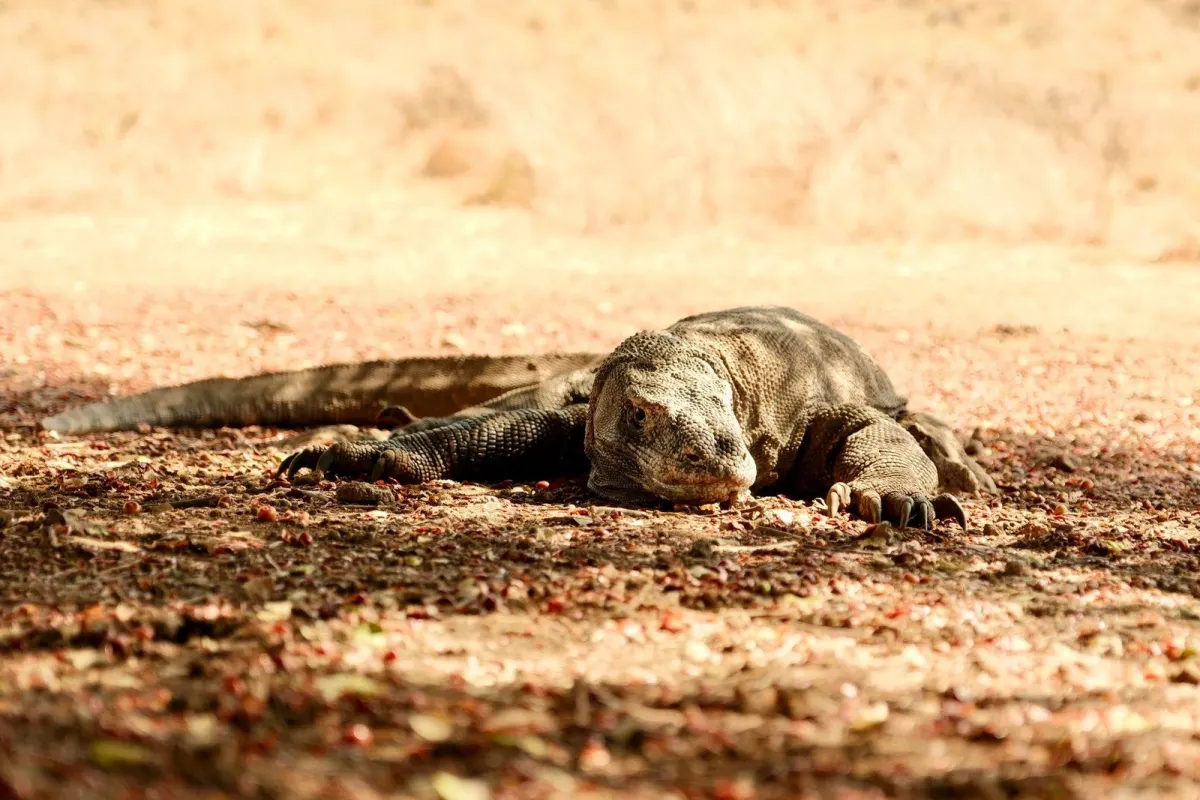
Baby Komodo dragons hatch tiny, vulnerable, and tree-bound: they are about 30–40 cm long and around 80–100 grams at birth, spend their earliest life off the ground, and face their biggest threat from adult Komodo dragons that may eat them.
How big is a baby Komodo dragon?
At hatching, a baby Komodo dragon is usually around 30–40 cm long and roughly 80–100 grams, according to Smithsonian’s National Zoo and Komodo Luxury. Those figures are consistent with other zoo references that describe hatchlings at about 40 cm and around 100 grams.
That size matters because the animal’s first stage of life is a survival race rather than a miniature version of adulthood. Young dragons are small enough to fit into narrow branches and dense vegetation, which helps them avoid larger predators.
Why do baby Komodo dragons live in trees?
Young Komodo dragons spend much of their first years in trees, according to the IPB journal article and the Smithsonian National Zoo. The main reason is avoidance of predation, especially by adult Komodo dragons.
This arboreal habit also helps juveniles find safer food such as insects, geckos, small lizards, bird eggs, and other small prey listed in the sources. In practical terms, the trees function as both shelter and a first hunting ground.
When do Komodo eggs hatch?
Komodo dragons lay eggs in nests after mating, and the eggs incubate for about 7–8 months, according to Komodo Luxury and National Geographic. The sources say laying often occurs in the dry season or late in the year, with hatching commonly falling in the following months.
For readers searching “baby komodo dragon,” this explains why hatchlings are not seen all year in the same way as adult animals. The timing is linked to the species’ reproductive cycle, nest conditions, and seasonality in Komodo’s dry tropical environment.
What do baby Komodo dragons eat?
Baby Komodo dragons start on small, manageable prey. The sources describe a diet of insects, geckos, small lizards, bird eggs, and other small animals, while adults shift to much larger prey as they grow.
That dietary split reflects a basic rule of the species: juveniles and adults do not occupy the same feeding niche. It reduces direct competition, even though the danger from adults remains high.
How do they survive in Komodo National Park?
Survival depends on hiding, climbing, and moving fast away from larger dragons. The sources say hatchlings are vulnerable from the first hours after emerging and that tree cover is their main protection.
- Size: about 30–40 cm long at hatch.
- Weight: about 80–100 grams at hatch.
- Incubation: about 7–8 months.
- Early habitat: trees and dense vegetation.
- Main threat: adult Komodo dragons.
For visitors to Komodo National Park, this means the “baby” stage is not a public-petting-zoo moment but a hidden part of the species’ life cycle. The hatchlings’ survival strategy is caution, not display.
Sources
Read next
More on this story
Wildlife
Are Komodo dragons venomous? What the science says
Komodo dragons are venomous lizards. Research has identified venom glands and toxins that help them weaken prey by lowering blood pressure and prevent…
Latest in Komodo National Park
Today’s top story

Related