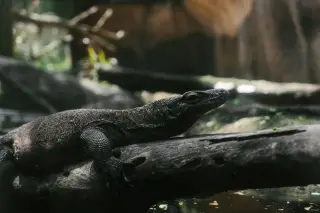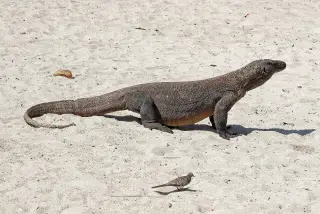

Komodo dragon pet: can you legally keep one?
Komodo dragons are not pets: private ownership is generally prohibited, with rare exceptions for accredited zoos, research institutions or special educational permits.
Editor: Mursyid Sonsang
· 3 min read

Komodo dragons are not legal or practical pets: they are wild, dangerous reptiles protected by conservation rules, and private ownership is generally prohibited except in tightly controlled institutional settings, according to the Environmental Literacy Council and the U.S.ARK state-law guide.
Can you legally keep a Komodo dragon as a pet?
The short answer is no. The Environmental Literacy Council says private individuals cannot legally own a Komodo dragon, and its ownership guide says the species is treated as a protected animal rather than a household pet.
In the United States, USARK’s reptile-ownership guide says Komodo dragons fall under special-use permitting for bona fide educational programs after inspection and approval of facilities, not ordinary private pet ownership.
Why is it treated differently from other reptiles?
Komodo dragons are large, powerful predators with a venomous bite, and Smithsonian’s National Zoo says keepers must be very careful when handling them because of their thick skin, sharp teeth and venomous bite.
The species is also protected under international wildlife-trade rules. The Environmental Literacy Council identifies Komodo dragons as an Appendix I species under CITES, the highest level of trade protection in that system.
Who can keep one, if anyone?
According to USARK, permission may be issued only in limited cases for bona fide educational programs, following inspection and approval of the proposed facilities. The Environmental Literacy Council says permits are typically limited to accredited zoos, research institutions or conservation organizations.
That means the legal path, where it exists, is about conservation, education or research — not private pet keeping.
What would captivity require?
Zoo and specialist care references describe Komodo dragons as needing escape-proof enclosures, strong barriers, heated basking areas, deep substrate and large water features, reflecting their size and behavior. Smithsonian’s National Zoo also notes that keepers must manage them carefully because of their dangerous bite and physical strength.
- USARK says special-use permits may be issued only after inspection and approval of facilities for bona fide educational programs.
- The Environmental Literacy Council says private ownership is generally prohibited, with exceptions usually limited to accredited zoos and research institutions.
- Smithsonian says the species has a venomous bite and requires very careful handling.
What does this mean for readers in Komodo National Park?
For visitors to Komodo National Park, the key point is that the dragon is a wild protected animal, not a pet species. In the park and on surrounding islands, responsible tourism means observing Komodo dragons at a distance and following park rules rather than attempting to keep or handle them.
Sources
Read next
More on this story

Marine & Diving
Komodo diving liveaboard: how it works, when to go and what changed
A Komodo diving liveaboard is a multi-day dive cruise from Labuan Bajo into Komodo National Park, usually 5 to 10 nights, with the dry season as the m…
Latest in Komodo National Park
Today’s top story

Related