

Are Komodo dragons venomous? What the science says
Komodo dragons are venomous lizards. Research has identified venom glands and toxins that help them weaken prey by lowering blood pressure and preventing blood clotting, though human bites are also dangerous because of trauma and infection.
Editor: Mursyid Sonsang
· 3 min read
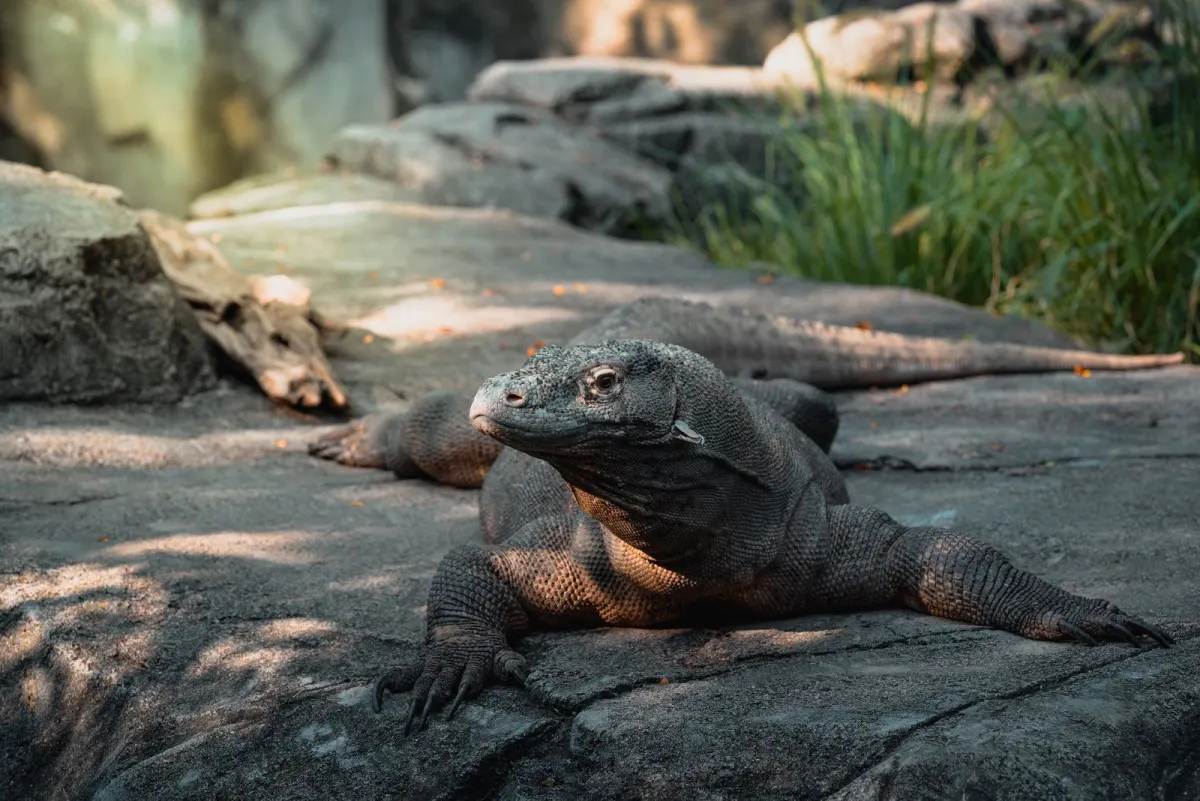
Yes. Komodo dragons are venomous lizards: research has identified venom glands in the lower jaw and venom proteins that can lower blood pressure and inhibit blood clotting, helping the animal subdue prey with a bite and prolonged bleeding.
What makes a Komodo dragon bite venomous?
The best-supported explanation is that the bite is not just mechanical. A 2009 study in Proceedings of the National Academy of Sciences described venomous effects in Komodo dragon predation, including anticoagulation and shock-inducing hypotension.
Smithsonian’s National Zoo also describes Komodo dragons as one of the few lizard species with a venomous bite and says the venom prevents prey blood from clotting.
How does the venom work?
The venom helps the dragon’s bite do more damage by making wounds bleed longer and by dropping blood pressure. In the 2009 study, intravenous doses in rats produced profound hypotension at 0.1 mg/kg and hypotensive shock at 0.4 mg/kg.
That means the dragon relies on a combination of sharp teeth and venom, rather than venom alone, to weaken prey.
Were Komodo dragon bites once thought to be “infected” bites?
Yes. Earlier theories blamed bacteria in the mouth for killing prey after a bite, but the later venom studies shifted that view toward venom as an important part of the predatory mechanism.
Scientific American reported in 2009 that the new evidence showed the dragons kill with venom, not bacteria.
Are Komodo dragons dangerous to people?
They are dangerous because of their size, bite force, and the potential for severe blood loss and infection. A 2016 clinical review in Wilderness & Environmental Medicine said published reports did not show proof of clinical envenomation in humans, even though the species is historically regarded as venomous.
So the safest answer is that Komodo dragons are venomous, but human bites are a separate medical problem that can involve trauma, bleeding, and infection rather than a neatly documented venom syndrome.
Why does this matter in Komodo National Park?
In the park’s islands, understanding the dragon as a venomous predator helps explain its hunting strategy and why visitors are told to keep distance from wild animals. RRI says the Komodo dragon is endemic to several islands within Komodo National Park in East Nusa Tenggara.
- Short answer: yes, Komodo dragons are venomous.
- Best-supported effect: lowered blood pressure and reduced clotting in prey.
- Older myth: bacteria alone cause the kill; modern studies do not support that as the main explanation.
Sources
Read next
More on this story
Komodo National Park
Baby Komodo dragon: size, diet, and why hatchlings live in trees
Baby Komodo dragons are not miniature adults. They hatch after about 7–8 months, measure roughly 30–40 cm, weigh about 80–100 grams, and spend their e…
Latest in Wildlife
Today’s top story

Related