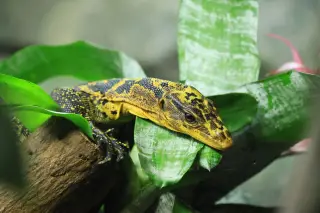

Komodo dragon close up: what its scales, tongue and teeth reveal
A close-up Komodo dragon is easiest to identify by its forked yellow tongue, rough armored scales, serrated teeth and heavy tail.
Editor: Mursyid Sonsang
· 3 min read
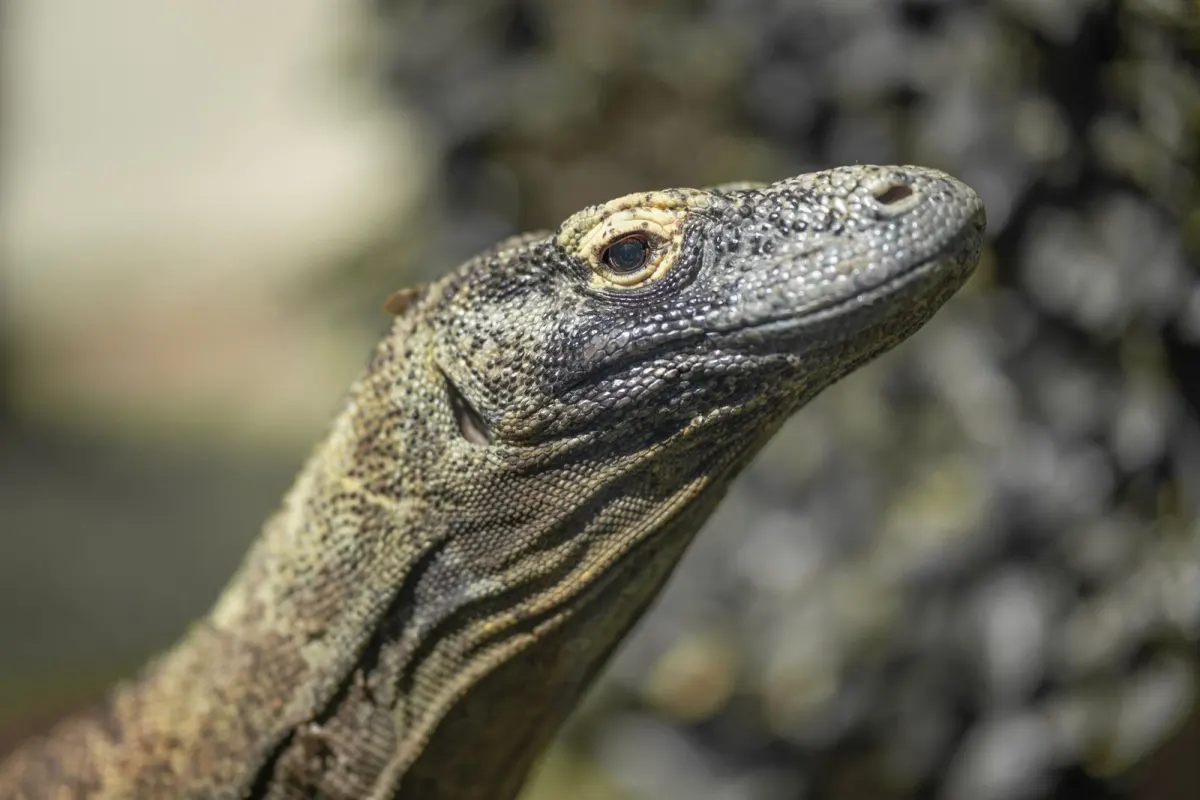
A close-up of a Komodo dragon usually shows the traits that make the species distinctive: a large lizard with a forked yellow tongue, rough armored scales, powerful limbs and a muscular tail. Smithsonian’s National Zoo says adults are typically stone-colored, while younger animals can be more colorful, and several zoo and reference sources describe the species as the world’s largest living lizard.
What does a Komodo dragon look like up close?
Up close, the head is broad, the snout is rounded and the tongue is long and forked, according to Smithsonian’s National Zoo and the Toronto Zoo. The skin looks rough and granular because the body is covered in overlapping scales, and some sources describe bony plates called osteoderms beneath the skin.
Zoo references also note that adults are usually gray, brown or blackish, while juveniles often show more color, including yellow or banded patterns. That difference is one reason close-up photos of young and adult Komodo dragons can look strikingly different.
How big is a Komodo dragon?
Smithsonian’s National Zoo says wild Komodo dragons typically weigh about 70 kilograms, while the largest verified specimen reached 3.13 meters and 166 kilograms. The Global Conservation page gives the same verified maximum size and weight, which reinforces that the species is the largest living lizard by body size.
Other zoo fact sheets place adult males around 3 meters and adult females smaller, but the exact figures vary by source and population. For readers looking at a close-up image, the key point is that even a single adult can appear massive because of its long tail, thick body and muscular legs.
Why do their teeth and tongue stand out in close-up?
Komodo dragons have around 60 serrated teeth, and several zoo sources say those teeth are replaced frequently. That serrated bite is part of what gives close-up mouth shots their shark-like look.
The yellow forked tongue is also highly visible in close-up images. Smithsonian’s National Zoo and several zoo fact sheets describe it as a defining feature, and it helps explain why the species is often compared with mythical dragons.
Where does a close-up Komodo dragon image usually come from?
In Komodo National Park, close encounters are associated with the islands and protected habitat where the species lives, but the animal remains wild and physically dangerous. The park authority and Indonesian public broadcasting coverage both describe the Komodo dragon as the world’s largest living lizard in East Nusa Tenggara, where visitors can observe it only under controlled conditions.
For a reader searching for “komodo dragon close up,” the practical takeaway is that the most recognizable close-up details are the tongue, scales, eyes, teeth and tail — not just the animal’s size. Those features are what make the species instantly identifiable even in a tight frame.
What should readers know about the species in Komodo National Park?
Komodo dragons are a protected wildlife attraction of Komodo National Park and a core species for conservation in the area. The park’s role matters because close-up views of the dragon are tied to a protected habitat rather than a pet or zoo setting, which is why the animal is central to both tourism and conservation in the region.
Sources
Read next
More on this story
Komodo National Park
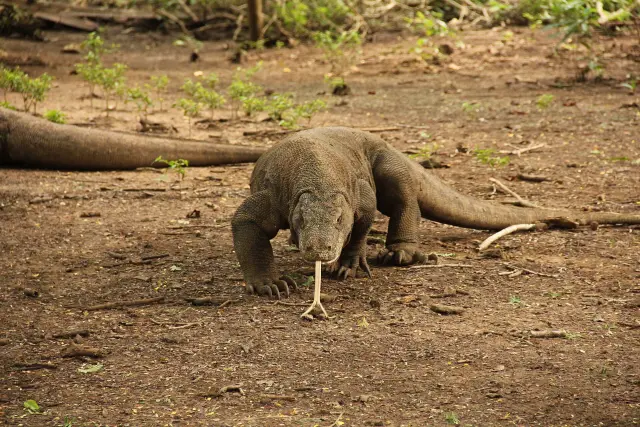
Komodo dragon walking: how the giant lizard moves in the park
Komodo dragons walk on all fours with a side-to-side gait, can sprint in short bursts, and usually stay close to their home valleys inside Komodo Nati…
Latest in Wildlife
Today’s top story

Related