
Study Proposes Community-Based Tourism Model for Wae Lolos
A 2026 academic paper proposes community-based tourism governance for Wae Lolos in West Manggarai, but says implementation is still weak and no village operating rules are in place.
By Mukmin John
Editor: Mursyid Sonsang
· Event date: · 3 min read
Labuan Bajo — A 2026 academic study says Wae Lolos in West Manggarai should adopt a community-based tourism governance model built around stronger local institutions, broader resident participation, fairer benefit sharing and better protection of culture and the environment.
The paper, published on Feb. 9, 2026, examines how sustainable tourism policy is being carried out in the village and argues that implementation remains weak even as tourism activity expands around Labuan Bajo. It presents its model as a policy proposal, not as a confirmed village regulation or a system already operating in Wae Lolos.
What the study proposes
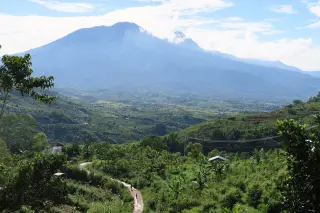
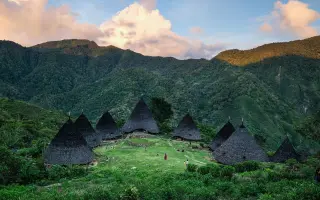
According to the paper, the village has tourism assets including waterfalls, hot springs, tropical forest and Manggarai cultural traditions and arts. The authors argue that the goal should be to move residents from passive recipients of tourism development to active participants in planning and decision-making.
The study’s main priorities are strengthening local tourism institutions, ensuring inclusive participation, distributing tourism benefits more fairly, and protecting local culture and the environment. It also says policy goals broadly align with regional tourism policy, but the gap lies in practice on the ground.
The study describes obstacles including weak coordination, limited support, the absence of village-level operational guidance, infrastructure gaps and environmental concerns. It does not provide a formal operating manual, revenue formula or a legally adopted institutional structure for Wae Lolos.
Local context
Wae Lolos is in Sano Nggoang district, West Manggarai Regency, East Nusa Tenggara, and is described by the village’s tourism promotion materials as a community-based tourism destination. Local reporting and official tourism materials say the village has been developed as part of wider efforts to diversify tourism beyond Komodo National Park.
The West Manggarai regency government launched Wae Lolos as a tourism village in December 2024, according to a regional tourism release. A local media report later said the village was being prepared as a smart traditional tourism village through collaboration between the Polytechnic eLBajo Commodus, the regency government and the village tourism group.
That wider context matters because the 2026 study places Wae Lolos inside the tourism growth triggered by Labuan Bajo’s status as a national priority destination. The authors say the challenge is not the absence of policy, but the gap between policy commitments and practical arrangements for coordination, participation, institutional capacity and benefit sharing.
What remains unresolved
The study calls for fairer distribution of tourism benefits, but it does not say how money should be collected, audited or divided among households, operators, village institutions or public programs. It also does not identify specific groups, voting rights or seat allocations inside the proposed governance structure.
For residents and visitors, the distinction is important: the paper offers a framework for consideration, not evidence that Wae Lolos has already adopted a complete governance system.
Wae Lolos has also drawn visitor interest in recent years. A 2025 report said the village recorded 11,015 tourist visits during 2024, based on the local tourism group’s records.
Sources
Next story
BMKG Warns of 3.5m Waves off South Sumba Through 19 September
Indonesia’s BMKG maritime station in Kupang warns of moderate to high waves across key Nusa Tenggara Timur routes from 17 to 20 September 2026, with t…
Related