
Komodo Village trekking routes mapped with Komodo dragon encounters
Komodo Village residents and Universitas Padjadjaran students mapped new trekking routes behind the settlement in 2022, documenting repeated Komodo dragon encounters and diverse fauna along community-initiated paths inside Komodo National…
Editor: Mursyid Sonsang
· Event date: · 4 min read
Labuan Bajo — Two trekking routes behind Komodo Village on Komodo Island were documented in detail during a joint community and research programme by Universitas Padjadjaran students and Komodo National Park staff in August 2022, recording repeated encounters with Komodo dragons and other wildlife along newly established village paths.
The routes run behind the village settlement within the Komodo National Park’s Kampung Komodo Resort, under Management Section II.
According to a September 2022 article published by the Directorate General of Natural Resources and Ecosystem Conservation (KSDAE) of Indonesia’s environment ministry, the paths were initiated and opened by several Komodo Village residents in 2020 as a new trekking alternative directly behind the community.
What the 2022 survey found
KSDAE reports that six Universitas Padjadjaran students, participating in the “Eksplorasi Nusantara 2.0” programme, carried out fauna observations along the Komodo Village trekking routes from 23 August to 2 September 2022, with field surveys on the trails from 24 to 26 August.
The official account states that the team walked the routes morning and late afternoon over three consecutive days, using a cruising method and point counts to record all wildlife encounters along the paths.
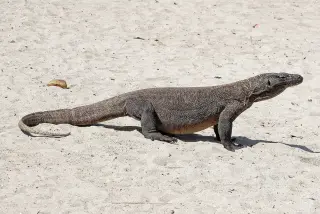
Along the trekking routes, the students encountered Komodo dragons 14 times and found several nests near the paths, indicating that the routes pass through areas actively used by the protected lizard.
KSDAE notes that the observations took place during the dragons’ June–August mating season, when adults are active around nesting areas.
Beyond Komodo dragons, the ministry’s article and a subsequent fauna inventory paper in the journal Biotika report that the survey documented 19 bird species, two mammal species, one other reptile species and 18 insect species along the routes.
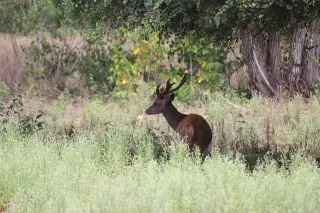
Examples cited in the official narrative and related research include wild boar, yellow-crested cockatoos, white-bellied sea eagles and brahminy kites, recorded in or near the trekking area behind the village.
The fieldwork was supported by local knowledge: KSDAE identifies Tajudin, a Komodo Village resident and naturalist guide, as leading the team along the routes, while additional interviews with Ata Modo community members gathered perceptions of wildlife and the new trails.
Route data
Early accounts from park authorities describe two alternatives behind Komodo Village: a medium trek and a long trek, characterised as follows:
- Medium trek: initially reported at about 1.8 kilometres
- Long trek: initially reported at about 2.4 kilometres
- Komodo dragon encounters recorded: 14 during the August 24–26, 2022 survey
- Survey period on the trails: 24–26 August 2022
Subsequent mapping using GPS, published in a 2023 fauna inventory study, refined those figures, measuring the medium trek at approximately 1.98 kilometres and the long trek at about 2.87 kilometres.
Community initiative and ecotourism potential
According to Komodo National Park’s own communication channels, residents of Komodo Village began opening the trekking routes in 2020 as part of efforts to create alternative attractions for visitors arriving on the island.
Research by the Eksplorasi Nusantara team and collaborating authors describes the trails as a community-initiated asset that could support ecotourism, environmental education and further scientific studies, provided development is coordinated with park management and follows conservation regulations.
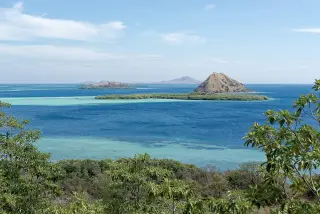
During the programme, students also explored nearby savanna landscapes with sea views, engaged with villagers about local legends and traditions, and observed handicraft production such as Komodo-themed statues that could function as locally made souvenirs.
Academic analyses of Komodo Village tourism note that subsequent work has focused on mapping the trekking routes, installing directional signs and information boards, and testing the routes with park rangers, with the aim of clarifying access and improving safety in areas used by Komodo dragons.
Sources
- Direktorat Jenderal Konservasi Sumber Daya Alam dan Ekosistem (KSDAE), Kementerian Lingkungan Hidup dan Kehutanan
- Balai Taman Nasional Komodo, Direktorat Jenderal KSDAE
- Jurnal Ilmu-ilmu Agribisnis (JIIA), Universitas Islam Syekh Yusuf
- LinkedIn profile of Annisa Zahra
- Biotika journal article, Universitas Padjadjaran
- Jurnal Pengelolaan Lingkungan Berkelanjutan (JPLB), BKPSL
Next story
Komodo National Park reefs host more than 1,000 fish species, sources say
Komodo National Park sits inside the Coral Triangle, where UNESCO and WWF say its waters hold more than 1,000 fish species and more than 260 coral spe…
Related