

Komodo National Park tightens rules for Komodo dragon encounters
Komodo National Park now applies mandatory ranger guidance, strict behaviour rules and daily visitor quotas managed through an online reservation system.
Editor: Mursyid Sonsang
· 5 min read
Labuan Bajo — Visitors planning close encounters with Komodo dragons in Komodo National Park are now required to follow detailed safety and conservation rules, including mandatory ranger guidance, distance and behaviour restrictions, and new visitor quotas managed through an online reservation system.
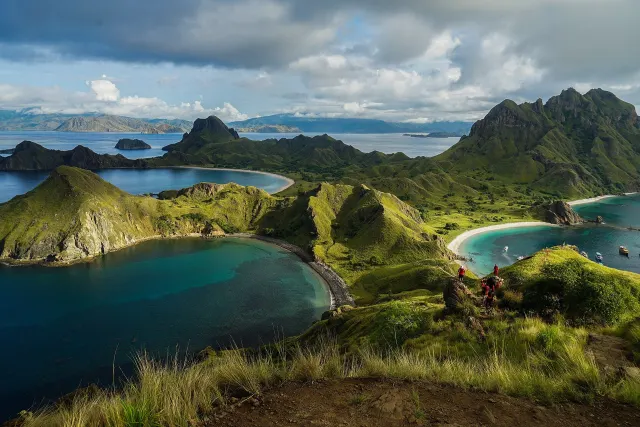
Komodo National Park in East Nusa Tenggara remains the principal destination for observing wild Komodo dragons in their natural habitat, as highlighted in a photo report by Travel Detik that describes the species as a prehistoric reptile living in the park’s savanna landscapes. Visitors typically access terrestrial viewing areas on Komodo and Rinca islands under supervision from park staff.
Mandatory rangers and guided treks
Terrestrial visits in Komodo National Park are not conducted independently. According to guidance collated by local operators and safety advisories, all land treks on Komodo and Rinca Islands must be accompanied by a licensed park ranger or ranger-guide, and unguided walking beyond immediate station areas is prohibited. Ranger presence is described as a core safety measure because Komodo dragons are large wild predators capable of dangerous bites.
CNN Indonesia reported earlier efforts by the park authority to tighten visitor safety, including requirements that visitors report to staff, purchase tickets before activities and remain under observation by park personnel while inside the protected area. Safety advisories also recommend that visitors with open wounds or menstruating women inform rangers before trekking, reflecting dragons’ strong sense of smell for blood.
Minimum distances and prohibited behaviour
Komodo dragons may appear slow when resting but can move rapidly over short distances. For that reason, multiple safety guides advise visitors to maintain a minimum separation of several metres and never approach a dragon for a photograph. One Labuan Bajo safety guide recommends a minimum distance of about three metres, while another travel advisory cites five metres as a recommended buffer.
Park-focused guidance stresses that rangers will indicate appropriate distances during each encounter and may adjust them based on the animal’s posture and behaviour.
Prohibited behaviour is widely emphasised. Visitors are repeatedly instructed not to touch, feed, provoke or attempt to influence Komodo dragons, and to stay on marked trails behind their ranger, without wandering off or separating from the group. Standard advice also includes not crouching or sitting on the ground near dragons and avoiding sudden movements or loud noises that could trigger a predatory response.
Beyond direct encounters, official protocol published by the Ministry of Environment and Forestry’s conservation directorate lists broader bans inside Komodo National Park, including getting too close to terrestrial and marine wildlife, leaving any form of trash, operating drones without permission, diving without certification at designated sites, and removing sand, coral or other physical objects from the park.
Quotas, timed entry and reservations
Visitor numbers are now subject to tighter limits. Reports on recent policy changes state that from April 2026 the Balai Taman Nasional Komodo has capped total daily visitors to the park at around 1,000 people to protect ecosystems and improve safety and comfort. The quota is implemented through sessions distributed via the SiOra (Sistem Informasi Online Reservasi Alam) reservation system, with visitors required to book in advance rather than relying on walk-in entry.
Detailed quotas vary by site. Coverage of the new system notes that Loh Liang on Komodo Island, Loh Buaya on Rinca Island and Padar Island each have separate daily caps, while guidance from a Komodo-focused information site cites a specific limit of 750 visitors per day at Loh Liang, divided between morning and afternoon sessions booked through SiOra.
Research on earlier management proposals also recorded previous caps of up to 1,500 visitors per day and minimum observation distances of five metres in conservation-oriented scenarios, illustrating the park’s long-term move toward stricter controls.
Preparing for a responsible visit
Safety advisories consistently recommend that visitors secure current, official information before travelling, including confirmation of entry permits, session times, quotas and any seasonal time restrictions on trekking. On arrival, visitors are expected to follow ranger directions without attempting to negotiate closer approaches to dragons, and to ask staff what to do if an animal moves toward the group or changes direction.
Conservation guidance emphasises that limits on proximity, group sizes, daily visitors and access hours are part of responsible wildlife tourism rather than obstacles. Observing Komodo dragons in their habitat is presented as a privilege that depends on leaving animals and ecosystems undisturbed, complying with all rules, and treating rangers’ instructions as binding rather than optional.
Sources
- Direktorat KSDAE – Protokol Kunjungan Wisata Alam TN Komodo
- CNN Indonesia – Wisatawan ke TN Komodo Dibatasi 1.000 per Hari Mulai April 2026
- Labuan Bajo Today – April 2026, Kunjungan ke TN Komodo Dibatasi 1.000 Orang per Hari
- Suara Surabaya – Kuota Wisata Taman Nasional Komodo Dibatasi 1.000 Orang per Hari Mulai April 2026
- Sonora.id – Etika & Aturan di Taman Nasional Komodo
- Labuan Bajo Komodo – Komodo National Park Safety: Rules, Rangers & Real Risks
- Labuan Bajo Luxury – Komodo Dragon Safety Tips — How to Stay Safe During Your Visit
- Detik Travel – Simak Nih! 18 Larangan yang Wajib Dipatuhi Wisatawan di TN Komodo
- JITHOR Journal Article – Visitor Management in Komodo National Park
- Komodo Guide – Loh Liang: Komodo Island's Primary Ranger Station
- Travel Wise Lombok – Is Labuan Bajo Safe for Tourists?
Next story
Komodo Park Visitor Cap Already Covers Padar, Verified Sources Show
Indonesia’s Forestry Ministry already limits Komodo National Park to 1,000 visitors a day, with Padar included in the park-wide cap. Verified sources…