

Komodo archive documents 1990s–2000s marine management studies
Komodo National Park’s online downloads page consolidates historical information sheets, reports and books on zoning, coral reefs, fisheries and resource use.
Editor: Mursyid Sonsang
· 4 min read
Labuan Bajo — An online archive on the Komodo National Park website gathers information sheets, reports, books and other materials documenting marine and terrestrial management work, much of it carried out between the late 1990s and mid‑2000s. The page functions as a historical research library, not as a fresh assessment of current environmental conditions.
The archive’s main entry groups documents into information sheets, reports and papers, books and other information materials, and notes that some PDF graphics may require repeated zooming to display correctly, according to the park website’s downloads section. The collection offers a structured view of the topics that earlier management and conservation programmes sought to measure, including zoning, coral‑reef condition, fish populations, marine‑resource use, enforcement and tourism‑related partnerships.
Information sheets and marine indicators
According to the archive’s information‑sheet listing, Komodo National Park provides separate documents titled Effective Marine Protected Area Management, Zonation in Komodo National Park, Coral Reef Monitoring in Komodo National Park and Fish Monitoring in Komodo National Park. Other information sheets cover Marine Resource Utilization in Komodo National Park, Cetacean Surveys in Komodo National Park, Coral Reef Recovery, Enforcement in Komodo National Park, Marine Environmental Awareness and Education, Pelagic Fisheries and the Komodo Fish Culture Project: Promoting Alternative Livelihoods and Market Transformation.
Together, these titles reflect distinct evidence streams for earlier monitoring programmes: zoning describes how uses and protections are arranged within the park; coral‑reef monitoring and recovery track reef status and rehabilitation; fish‑monitoring and pelagic‑fisheries documents focus on commercially targeted species and fishing activity; and resource‑utilization and enforcement materials address how communities and authorities use and regulate park resources.
A separate information sheet on Collaborative Park Management: Partnerships, Financing and Ecotourism at Komodo National Park highlights the role of governance, funding structures and tourism in shaping conservation outcomes.
The archive listing itself does not summarise sampling dates, locations, methods or datasets for each document, and it does not state whether the findings remain valid for current conditions. Readers therefore need to consult each report or paper directly for methodological detail and fieldwork periods.
Reports, books and historical studies
Beyond information sheets, the downloads page links to longer reports on resource use, environmental assessment and stakeholder involvement. A Marine Resource Utilization Monitoring report outlines management‑plan modules such as designing marine zonation, cross‑sectoral enforcement and comprehensive monitoring, including coral‑reef status, commercially targeted fish, resource‑utilization patterns and applied research on mariculture and coral‑reef rehabilitation.
A separate stakeholder‑involvement workplan describes efforts by The Nature Conservancy and park authorities to establish a zoning system and monitoring programmes for coral reefs, fish populations, resource use and cetaceans from the late 1990s onward.
The archive also links to an Environmental Assessment Study that discusses changing coral habitats and ongoing monitoring of live and dead coral, damage at key dive sites and related marine fauna and flora. These reports, together with monitoring papers and project summaries from the same period, help reconstruct the management context in which Komodo’s marine zoning, enforcement and alternative‑livelihood strategies were developed.
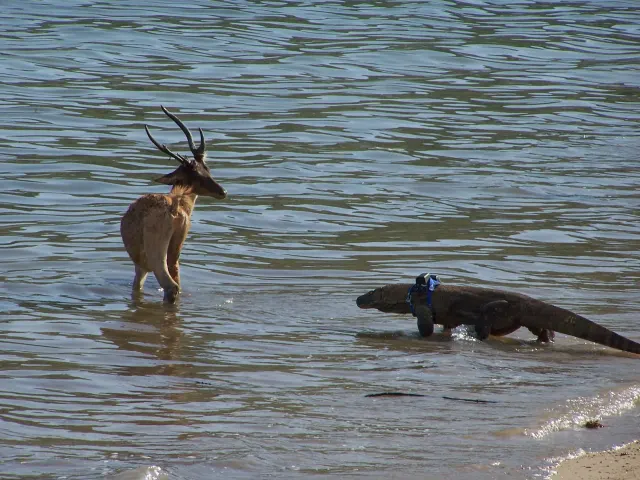
Several documents extend beyond marine topics, including reports and books on the park’s terrestrial environment and species such as Komodo dragons and their prey. The archive identifies organisations involved in producing or supporting the materials, including The Nature Conservancy, the Komodo National Park Authority and partner NGOs and research institutions, according to credits in the download listings and individual reports. Those affiliations indicate who contributed to particular studies but do not, on their own, show that every recommendation was formally adopted as park policy.
Using the archive responsibly
For readers and researchers, the archive is best approached as a trail of historical evidence rather than a single, up‑to‑date status report. Claims about zoning should be checked against the zoning materials and their publication years; statements about reef recovery or fish populations should be matched to the relevant monitoring and rehabilitation studies; and assertions about fisheries or resource use should be tested against the pelagic‑fisheries and utilization reports.
It is also important to distinguish between a report’s publication date and the period when fieldwork took place, since several monitoring programmes described in the archive began in the late 1990s and continued into the early 2000s. The download page supplies titles, authors, document types and file sizes, but users must open individual reports to see underlying findings and methodological detail.
Historical documents can show what managers and researchers measured and how Komodo’s marine management system was designed, yet they cannot by themselves demonstrate present‑day environmental or tourism pressures in the park.
Sources
Next story
INS Named Suspect in Komodo Deer-Poaching Case
Forestry law enforcement authorities named INS, 33, as a suspect in the alleged poaching of Timor deer in Komodo National Park after a nine-month manh…