
Hanita reef rehabilitation reports high coral survival and tourism potential
A coral rehabilitation partnership off Pulau Hanita in Manggarai Barat has restored thousands of coral fragments over a 9,000-square-metre area, with organisers reporting high survival rates and exploring the island’s potential as a…
Editor: Mursyid Sonsang
· Event date: · 4 min read
Labuan Bajo — A coral rehabilitation programme off Pulau Hanita in Manggarai Barat, East Nusa Tenggara, has reported survival rates of over 97% for transplanted corals between 2024 and 2026, with organisers promoting the site as a potential alternative to crowded visitor spots at Padar and Komodo islands.
The initiative is being implemented by CECT Sustainability at Trisakti University in partnership with state-owned port operator PT Pelindo and Yayasan Peduli Indonesia. The programme forms part of Pelindo’s marine ecosystem conservation commitments and Yayasan Peduli Indonesia’s community-based reef-restoration work around Labuan Bajo.
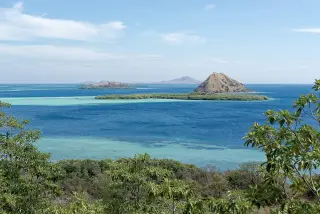
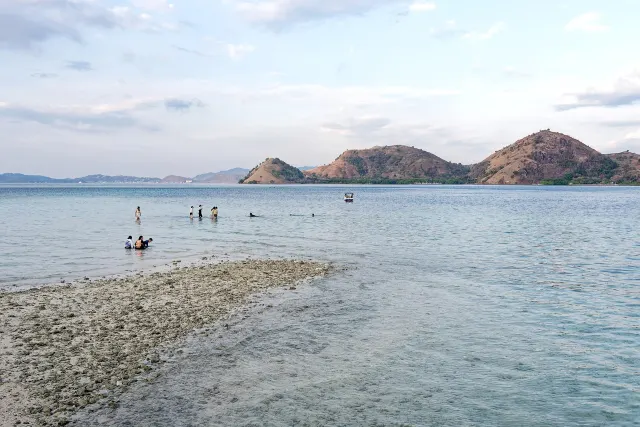
Media reports describe Pulau Hanita as an island without Komodo dragon habitat but with underwater attractions suitable for snorkelling and diving. Project organisers and local conservation advocates have framed the site as a way to diversify tourism and relieve pressure on popular terrestrial viewpoints and Komodo dragon-watching routes.
Rehabilitation scope and reported results
According to Media Indonesia, the Hanita reef intervention covers about 9,000 square metres, with a total of 50 substrate units and 7,500 coral fragments transplanted over two phases. The first phase, in 2024–2025, used 25 substrate units and transplanted 3,750 fragments, while the second phase in 2025–2026 repeated the same scale of work, doubling the totals.
The same report cites a coral survival rate of 97.4% over the implementation period and an estimated annual carbon uptake of about 4,500 kilograms of CO₂ from the rehabilitated area. It notes that corals previously experiencing declining quality are now growing well, with fish and other marine life again appearing around the restored structures.
A separate article on Pelindo’s reef-restoration work at Pulau Hanita provides slightly different figures, describing a two-stage programme from 2024 to 2026 using 50 substrate units and 6,500 coral fragments across the same 9,000-square-metre area, with a reported survival rate of 98.69% and an estimated annual carbon uptake of around 2,250 kilograms of CO₂. Both accounts attribute the work to the same partnership and report positive ecological responses, but they diverge on the number of fragments and survival and carbon figures.
CECT Sustainability’s director, Maria Ariesta Utha, is named in multiple sources as a key spokesperson on sustainability and community-based projects, including the Hanita reef rehabilitation. In the Hanita coverage, she is quoted describing improved coral growth and the return of marine life around the rehabilitation site.
Community involvement and tourism potential
Media coverage of Hanita and nearby sites emphasises the involvement of coastal residents from Seraya Marannu village in coral transplantation and maintenance. One report on Yayasan Peduli Indonesia’s work in Seraya Marannu states that 20 community members, including seven women from fishing households, took part in coral-restoration activities at Pulau Hanita in 2025. Another account on the Pelindo-backed programme highlights broader efforts to increase local participation in protecting the marine ecosystem.
According to Media Indonesia, Manggarai Barat Deputy Regent Yulianus Weng welcomed the collaboration between Pelindo, CECT Sustainability and local communities, describing it as a way to accelerate solutions to environmental problems in coastal and marine areas. Earlier profiles and official records confirm Weng’s position as deputy regent for the 2025–2030 period.
Project organisers have spoken publicly about the possibility of developing conservation-based tourism at Pulau Hanita, including visitor activities linked to coral planting and monitoring. They argue that a restored reef and active community stewardship could underpin quieter snorkelling and diving experiences, potentially easing overtourism pressures at Padar and Komodo.
Unresolved management questions
Available reports do not specify the survey methodology used to calculate the survival rates at Hanita, nor do they provide baseline coral-cover measurements, species-level data for the transplants or details of long-term monitoring protocols. The differing figures published for total fragments, survival rates and estimated carbon uptake underline the need for consolidated technical reporting from the project team.
Media coverage also does not set out whether Pulau Hanita has an agreed tourism carrying capacity, mooring and anchoring rules, waste-management systems or formal inclusion in a visitor-management plan for Komodo National Park. While local officials and project leaders have discussed Hanita’s potential role as an alternative destination, there is no published evidence that new tourism packages or visitor limits for the island have been formally approved.
As a result, Hanita’s reef-restoration work is currently best understood as a promising ecological and community initiative that may support future conservation-based tourism, rather than a fully defined solution to overtourism in the wider Komodo area.
Sources
Next story
Komodo dragons keep Indonesia’s Komodo National Park in global spotlight
Komodo National Park in East Nusa Tenggara remains a magnet for overseas visitors, offering the rare chance to see the world’s largest lizard, the Kom…
Related