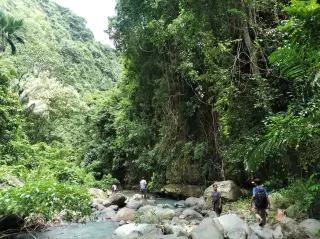

Flores quake leaves inland sites under review as Komodo tourism resumes
Komodo National Park and Labuan Bajo’s marine tourism have resumed normal operations after the mid‑August Flores earthquake, while inland attractions such as Goa Rangko, Wae Rebo and Kelimutu National Park initially closed for safety…
Editor: Mursyid Sonsang
· 4 min read
Labuan Bajo — Tourism operations in and around Komodo National Park have resumed following a powerful August earthquake off Flores, while several inland attractions including Goa Rangko, Wae Rebo and Kelimutu National Park were temporarily closed for safety inspections in the weeks after the disaster, according to Indonesia’s disaster agency and tourism officials.
The 7.7–7.8-magnitude earthquake struck East Nusa Tenggara on 15 August 2026, causing widespread damage to homes, public facilities and parts of the tourism sector across Flores Island. National and regional authorities have focused recovery efforts on restoring safe access to key destinations while continuing structural assessments at sites hit hardest by the shaking.
Komodo operating after safety checks
Indonesia’s National Disaster Management Agency (BNPB) said tourism activities in Komodo National Park and its surrounding marine areas remained operational and accessible to visitors after the quake, with no incidents reported in the park itself. The area continues to receive domestic and international tourists, supported by stable flight and boat traffic to and from Labuan Bajo, according to subsequent tourism briefings.
By 11 September, West Manggarai authorities reported that visitor flows to Labuan Bajo had returned to normal and that major attractions including Komodo National Park and Padar Island had reopened following precautionary safety closures. The Tourism Ministry and local administrations have treated safety verification as a condition for reopening, coordinating with the Labuan Bajo Flores Tourism Authority Agency, tourism associations and businesses to manage post-disaster recovery.
Available reports do not detail individual boat schedules, diving or snorkeling access at specific sites, or the status of every hotel and resort in the Labuan Bajo area. International visitors are advised to check directly with park authorities, tour operators and accommodation providers before departure, especially if their itineraries include more remote destinations on Flores.
Goa Rangko, Wae Rebo and Kelimutu initially closed
BNPB’s acting head of communication, Berton Panjaitan, said several leading tourist sites on Flores were temporarily closed so officials could inspect infrastructure and repair damaged facilities following the earthquake. Among the affected destinations he named were Goa Rangko (Rangko Cave) in West Manggarai, the Wae Rebo Traditional Village in Manggarai and Kelimutu National Park in Ende.
The closures were described as precautionary, with reopening dependent on completed safety checks and structural verification. Sector briefings compiled by travel-industry analysts added that other destinations such as Ruteng Pu’u, Teluk Maumere Marine Nature Tourism Park and several sites in Ngada and Nagekeo also faced temporary closure or disruption due to damage and power or communication outages.
Subsequent travel advisories indicate that some of these inland sites began reopening under restrictions from late August and early September, including Kelimutu National Park and Wae Rebo, which introduced limited hours and trial operations while continuing to monitor trail conditions and crater safety. Conditions remain subject to change, with local managers urging visitors to treat access as provisional and to follow official guidance on restricted viewpoints and routes.
Tourism infrastructure and visitor safety
BNPB’s damage assessments recorded significant impacts on housing and public infrastructure across Flores, with hundreds of homes destroyed or heavily damaged, alongside dozens of schools, health facilities and government offices. Tourism analysis from the Ministry of Tourism and industry observers noted that accommodation, village destinations and access routes were among the sectors affected by the quake.
At the same time, officials and tourism industry reports stressed that hotels in Labuan Bajo were largely able to continue operating, and that visitor numbers to Komodo National Park and nearby islands rebounded quickly. Ministry data cited in those briefings pointed to thousands of daily visitors to key sites such as Padar Island, Komodo Island, Rinca Island and Gili Lawa in the weeks after the earthquake.
Because damage and recovery progress vary by location, travelers planning trips to Flores are encouraged to seek up-to-date information from local governments, park authorities and accommodation providers, and to avoid entering closed attractions or structures flagged for inspection or repair. Regional tourism offices have committed to providing reopening updates for affected sites as safety verification continues.
Sources
- RRI.co.id – Indonesia Accelerates Tourism Recovery After Environmental Disasters
- Traveltext.id – Ministry Accelerates Recovery of Disaster-Affected Destinations
- Pear Anderson – Indonesia Southeast Asia Travel Industry Pulse
- HubLombok – Flores Tourism Sites Close After Earthquake as Safety Checks Begin
- Ocean Earth Travels – The Flores Earthquake: Where Things Stand
- Wikipedia – 2026 Flores earthquake
Next story
NTT Records 29,851 Foreign Tourist Visits in July 2026
Statistics Indonesia recorded 29,851 foreign tourist visits to East Nusa Tenggara in July 2026, up 18.67% year on year, while Manggarai Barat — home t…
Related