

UNESCO and Indonesia at odds over Rinca Island “Jurassic Park” project
Indonesia has pressed ahead with a high-profile tourism infrastructure project on Rinca Island in Komodo National Park, even as UNESCO’s World Heritage Committee warned in 2021 that the works needed to be halted and reassessed for their…
Editor: Mursyid Sonsang
· 4 min read
Labuan Bajo — Indonesia’s government has continued a tourism infrastructure project on Rinca Island in Komodo National Park despite a 2021 request from UNESCO’s World Heritage Committee to halt the work and revise its environmental impact assessment.
The initiative, widely dubbed the “Jurassic Park” project on social media, centres on new and upgraded visitor facilities at Loh Buaya on Rinca Island, one of the three main islands in the park and home to wild Komodo dragons.
UNESCO’s World Heritage Centre reported that the project involves renovation and expansion of existing park infrastructure to accommodate growing tourist numbers and manage human–wildlife interactions, with an estimated capacity of about 1,000 visitors per day once completed.
At its 44th session in July 2021, the World Heritage Committee adopted Decision 44 COM 7B.93, expressing concern that Indonesia’s environmental impact assessment for tourism infrastructure on Rinca did not adequately assess potential impacts on the park’s Outstanding Universal Value and had not been formally notified to UNESCO as required.
According to UNESCO and Indonesian media reports, the committee urged Indonesia to halt all tourism infrastructure projects in and around Komodo National Park that could affect its Outstanding Universal Value until a revised environmental impact assessment was submitted and reviewed by the International Union for Conservation of Nature (IUCN).
Government proceeds despite UNESCO concern
Indonesia’s environment and forestry ministry has maintained that the Rinca project can go ahead.
In August 2021, a senior ministry official, Wiratno, told Reuters that construction would proceed and that the project had been assessed as having no detrimental effects, describing it primarily as refurbishment of existing facilities and insisting it would not threaten Komodo dragons.
Subsequent coverage in Indonesian outlets reported that national and provincial authorities intended to continue infrastructure development in and around Komodo National Park while preparing revisions to the environmental impact assessment requested by UNESCO.
UNESCO’s State of Conservation report for Komodo National Park notes that on 9 August 2021 the World Heritage Centre sent a follow-up letter to Indonesia to verify third-party information about tourism infrastructure on Rinca and to recall the committee’s request for a revised environmental impact assessment.
Scope of the Rinca project
UNESCO’s later documentation describes the Rinca works as a tourism infrastructure project at Loh Buaya ranger station, involving an elevated viewing deck, visitor facilities and associated infrastructure aimed at managing close-range encounters between tourists and Komodo dragons.
The project focuses on renovation and expansion rather than construction of an entirely new resort complex, though its scale and the planned increase in visitor capacity have raised concern among conservation groups and some tourism stakeholders about potential habitat disturbance and pressure on wildlife.
The World Heritage Committee highlighted related issues including a reduction of wilderness zones within the park, the addition of tourism concessions and targets to significantly increase annual visitor numbers compared with pre‑pandemic levels.
Why the impact assessment is contested
UNESCO’s World Heritage Centre concluded that the original environmental impact assessment did not sufficiently address key risks, including impacts on Komodo dragon habitat, illegal fishing and broader ecological effects of intensified tourism inside a World Heritage Site.
Following international attention and domestic debate, Indonesia submitted a revised environmental impact assessment and an environmental management plan for the Rinca tourism project, which UNESCO has recorded as concluding no or negligible impacts on the site’s Outstanding Universal Value.
UNESCO and IUCN have continued to review these documents as part of the park’s State of Conservation process, while urging Indonesia to ensure that any tourism expansion remains compatible with conservation objectives and does not undermine Komodo National Park’s World Heritage status.
Komodo dragons at the centre of the debate
The Rinca development is controversial partly because it brings visitors closer to Komodo dragons, a vulnerable species found only in a few islands of Indonesia, including Komodo, Rinca, Padar and parts of Flores, according to conservation assessments cited by international and regional media.
Images shared by the activist collective Save Komodo Now in 2020, showing a Komodo dragon close to a construction truck on Rinca, helped fuel public concern over the visual and ecological impact of heavy machinery operating inside the park.
UNESCO has stressed that any tourism model built around close wildlife encounters requires robust management, clear visitor rules and effective ranger presence to safeguard both people and animals.
Sources
- UNESCO World Heritage Centre – State of Conservation (SOC 2021) Komodo National Park
- Reuters – Indonesia says ‘Jurassic Park’ project on track despite UNESCO warnings
- KBR – UNESCO Minta Proyek Taman Nasional Komodo Disetop
- The Diplomat – Development and Conservation Clash at Indonesia’s Komodo National Park
- The Jakarta Post – UNESCO’s call for project moratorium throws spotlight on Komodo National Park
- VICE – A ‘Jurassic Park’-Inspired Attraction is Endangering Komodo Dragons in Indonesia, Conservationists Say
- Express.co.uk
Next story
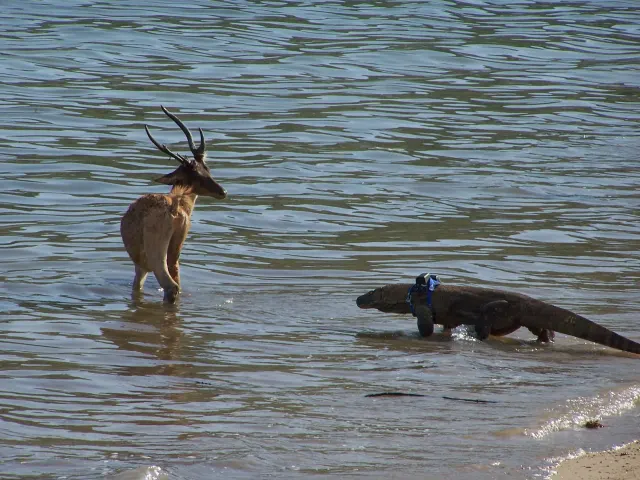
INS Named Suspect in Komodo Deer-Poaching Case
Forestry law enforcement authorities named INS, 33, as a suspect in the alleged poaching of Timor deer in Komodo National Park after a nine-month manh…