
Study finds higher stated conservation payments from foreign Komodo visitors
A July 2024 study in the journal Media Konservasi reports domestic tourists’ stated willingness to pay USD 25.573 and foreign tourists’ USD 39.4 for Komodo National Park entrance, along with separate amounts they would donate to a Komodo…
By Mukmin John
Editor: Mursyid Sonsang
· Event date: · 4 min read
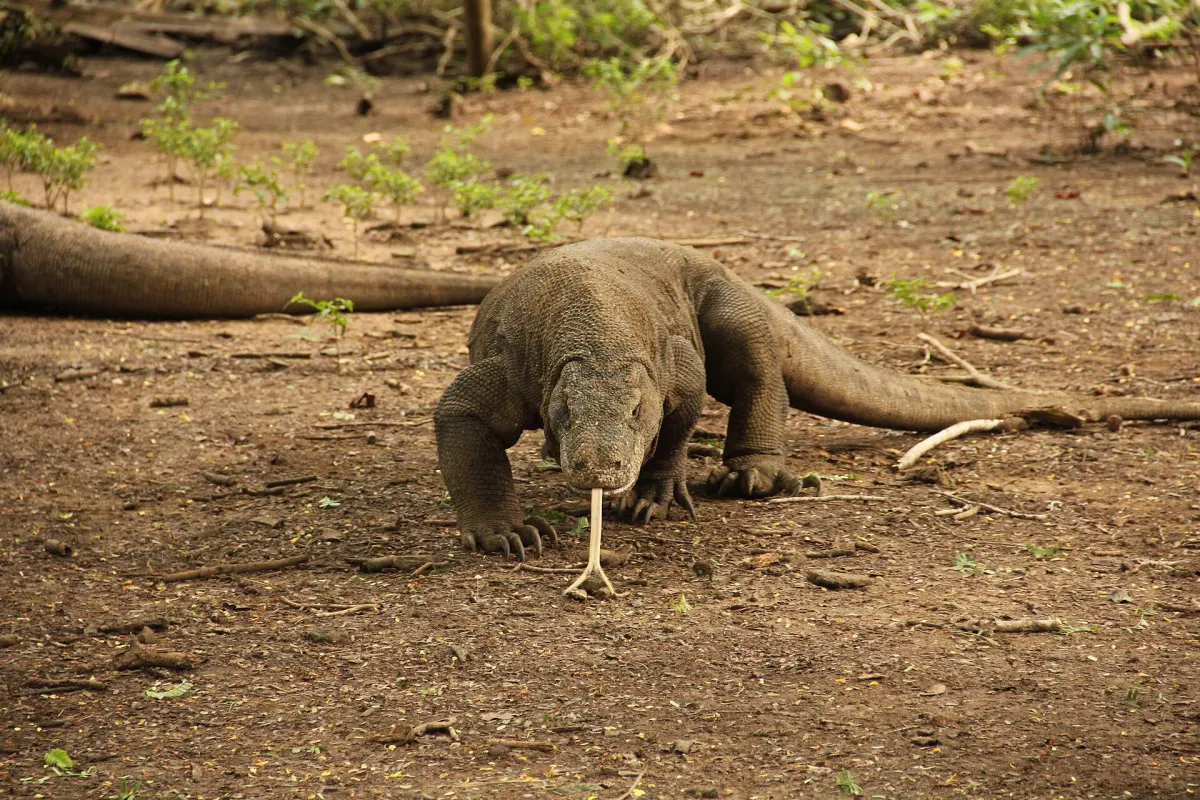
Labuan Bajo — A 2024 peer‑reviewed study in the journal Media Konservasi reports that domestic tourists visiting Komodo National Park have an average stated willingness to pay USD 25.573 for entrance, while foreign tourists report USD 39.4, as part of their support for Komodo dragon conservation.
The article, titled “Visitors Support for Komodo Dragon Conservation Fund,” appears in volume 29, issue 3 of Media Konservasi, published in July 2024, with DOI 10.29244/medkon.29.3.473. The authors analyse tourism growth and conservation financing and conclude that respondents show strong support for Komodo dragon conservation and for contributing to a dedicated conservation fund.
The study distinguishes between willingness to pay an entrance fee and willingness to contribute separately to a conservation fund. According to the full text, domestic tourists were willing to contribute IDR 68,000 (about USD 4.86) per visit or IDR 326,000 (around USD 23.3) per year, while foreign tourists indicated USD 7.5 per visit or USD 34.7 annually for a conservation fund contribution. These figures are reported as respondents’ stated preferences in the survey, not as official or proposed ticket tariffs.
What the study measured
The research links the need to review entrance fees and conservation funding to rising tourism numbers and the costs of protecting Komodo dragons and their habitat. It situates the discussion in the period after Komodo National Park gained international recognition as one of the New 7 Wonders of Nature in 2012, a designation that broader tourism literature associates with subsequent growth in visitor arrivals and hospitality development in Labuan Bajo.
Using park and regional data, the article reports a consistent increase in visitor numbers between 2015 and 2019, alongside growth in non‑tax state revenue, hotel accommodation and available bed capacity from 2010 through 2019. These trends are presented to show that tourism expansion has created both pressures and opportunities for financing conservation.
Within the survey component, the study identifies three types of institutions that respondents prefer to manage a dedicated conservation fund: government agencies, local communities and non‑governmental organizations. The management finding reflects respondent preferences rather than any existing or officially approved governance structure for such a fund.
How willingness to pay was reported
The reported figures of USD 25.573 for domestic visitors and USD 39.4 for foreign visitors represent average stated willingness to pay for the park entrance fee, as calculated by the authors from the survey data. The article notes strong support for Komodo dragon conservation among both groups and presents these numbers as evidence that tourists are prepared to pay more than the current tariff to support protection efforts.
For conservation‑fund contributions, the study reports additional amounts that visitors say they are willing to donate over and above the entrance fee. Domestic tourists’ per‑visit and annual willingness‑to‑contribute figures are derived from IDR amounts converted into USD, while foreign tourists’ contributions are expressed directly in USD terms. The paper treats these as voluntary contributions rather than mandatory charges.
The article does not use the willingness‑to‑pay estimates to forecast total park revenue. A forecast would require assumptions about future visitor numbers, the mix of domestic and foreign visitors, compliance rates with any higher fee, collection costs and a defined fee structure. These elements are outside the scope of the reported analysis.
Relationship to current park fees
The 2024 willingness‑to‑pay study is separate from the entrance fee policy currently applied at Komodo National Park. As of mid‑2026, information for visitors compiled from official regulations and park communications indicates that foreign visitors pay a flat entrance fee of IDR 250,000 per person per visit, while Indonesian citizens pay IDR 50,000 on regular days and IDR 75,000 on weekends and public holidays, under Government Regulation PP No. 36/2024 on non‑tax state revenue.
This current entrance fee structure integrates conservation funding within the single park ticket; there is no distinct, separately charged conservation‑fund line item for visitors. Revenues from these non‑tax fees are channelled to park operations and conservation activities, consistent with national practice for Indonesia’s protected areas system.
The Media Konservasi article does not state that any government agency has adopted the reported willingness‑to‑pay figures as official entrance fees, nor does it present them as a formal proposal. Instead, the study frames its results as input for policymakers considering how tourism growth might support conservation financing at Komodo National Park.
Sources
- Media Konservasi – Visitors Support for Komodo Dragon Conservation Fund (abstract page)
- Developing Marine Tourism Policy Pathways
- Willingness To Pay and Willingness To Co (summary document)
- Labuan Bajo – Market Update
- Komodo Park Permits, Quota & SiOra From Bajo Port
- Labuan Bajo Komodo Trip Cost: Full 2026 Budget Breakdown
- Komodo National Park Conservation and Visitor Impact
Next story
Kupang egg and staple prices cited from August 2023 market report
Market traders in Kupang reported egg, shallot and chili prices falling sharply in August 2023, alongside weaker meat sales, but the figures cannot be…
Related