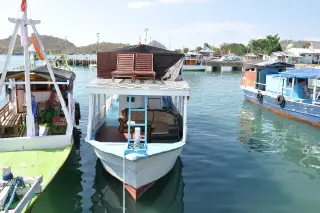

Labuan Bajo Cruise Traffic Grows, But Port Remains a Port of Call
Cruise ships visiting Labuan Bajo anchor offshore and tender passengers ashore for day visits, with immigration data showing at least 24 calls and more than 23,000 foreign passengers in early 2024.
Editor: Mursyid Sonsang
· Event date: · 5 min read
Labuan Bajo — Labuan Bajo continues to function primarily as a cruise port of call rather than a mainstream international homeport, with visiting ships anchoring offshore and tendering passengers ashore for day visits to the town and nearby Komodo National Park.
According to the Labuan Bajo cruise port guide published by CruiseAlert, the harbor is used by international cruise lines as a mid-voyage stop, not as a regular embarkation or disembarkation base for large-ship itineraries. The guide states that cruise passengers calling at Labuan Bajo are not processed through standard homeport procedures such as embarkation check-in or disembarkation baggage handling, and instead go ashore for limited shore visits before returning to their vessel.
A port of call is a stop during an ongoing voyage, where passengers arrive by ship, disembark for a shore excursion and then re-board the same vessel. A homeport, by contrast, is the point where a cruise begins or ends and therefore supports full embarkation and disembarkation flows, including check-in counters, baggage drop and collection systems, and ground transport for onward travel.
For Labuan Bajo, CruiseAlert describes a tender-based operation in which visiting cruise ships anchor in the bay and transfer passengers by smaller boats to a waterfront tender pier near the town. Indonesia Travel’s Komodo port information likewise notes that cruise ships serving Komodo Island use anchorage and tendering arrangements, with passengers landed close to the national park and Labuan Bajo identified as the nearest city and gateway.
Neither source presents Labuan Bajo or the Komodo anchorage as a large-scale turnaround hub for mainstream cruise fleets.
What the port-of-call model means for passengers
Under this model, passengers calling at Labuan Bajo generally remain attached to the same ship throughout their trip. They go ashore for excursions, meals and shopping, then return to the vessel before departure. CruiseAlert advises passengers to allow sufficient time for security and tender operations when returning to the ship, warning that the last tender typically leaves the harbor jetty 45–90 minutes before the published “all aboard” time.
Because Labuan Bajo is not described as a mainstream homeport, visitors who wish to continue travelling through Flores or elsewhere in Indonesia must arrange their own onward transport, accommodation and luggage handling. Indonesia Travel lists Labuan Bajo Airport as the closest airport to the Komodo anchorage and Labuan Bajo as the closest city, underscoring the town’s role as a tourism gateway rather than a large cruise turnaround base.
Shore excursions and spending
The port-of-call pattern concentrates passenger spending into the short shore visit. CruiseAlert’s guide highlights organized excursions to Komodo National Park and surrounding marine attractions, noting that these trips are a major focus for visiting cruise passengers. Indonesia Travel describes Komodo National Park as the habitat of the Komodo dragon and identifies Labuan Bajo as the nearest city and gateway for visits to the islands and marine environment.
CruiseAlert reports that cruise traffic has grown alongside Labuan Bajo’s development from a fishing town into an international tourism hub, citing immigration data that recorded 24 cruise-ship calls between January and September 2024, bringing more than 23,000 foreign passengers. Expat Life Indonesia, citing the Labuan Bajo Class II Immigration Office under Indonesia’s Ministry of Law and Human Rights, reports similar figures for the same period: 24 cruise ships and 23,225 international tourists, plus 116 domestic visitors.
These data points reinforce that Labuan Bajo is now a regular stop on regional cruise itineraries, even if it is not yet a large embarkation port.
Harbor operations and infrastructure
CruiseAlert describes the main harbor facility as Pelabuhan Labuan Bajo, a mixed-use port handling PELNI inter-island ferries, cargo vessels, fishing boats and cruise calls on shared infrastructure. The guide characterizes Labuan Bajo as a destination mainly used by expedition, small-ship and premium boutique cruise lines, with most visiting vessels carrying around 100–350 passengers and calls generally involving ships with fewer than 700 people. This scale aligns with Labuan Bajo’s tender-based operations and the absence of a large dedicated cruise terminal building.
Additional harbor information from Bajo Port, a local port guide, explains that cruise ships and larger vessels calling at Labuan Bajo do not dock at deep-draft berths in town but anchor offshore, using tenders to move passengers to a designated landing jetty.
The same source notes that the wider port area is managed in a mixed regime, with Pelindo functioning as the state-owned port operator for commercial terminals while the harbor master’s office (KSOP) oversees safety and ship movements. It also emphasizes that Labuan Bajo’s waterfront is shared between passenger facilities, cargo operations and tourism boats, and that the town does not yet have a single, purpose-built marina or cruise terminal comparable to major international ports.
Indonesia Travel’s port pages on Komodo list anchorage capacity, the Komodo anchorage’s proximity to Labuan Bajo and basic contact details for the port operator, but do not describe large-scale baggage processing, cruise check-in halls or regular turnaround operations for mainstream ocean-going cruise ships. Taken together, these sources indicate that Labuan Bajo currently serves as a busy gateway and tender port for expedition and small-ship cruises, but remains primarily a port of call rather than a full-service homeport.
Sources
Next story

Sabu Raijua beyond Kelabba Madja: hills, beaches and village culture
Sabu Raijua in East Nusa Tenggara offers more than Kelabba Madja, combining traditional villages, caves, beaches, limestone hills and salt ponds.
Related