
Komodo’s reef mantas link tourism, protection and park management
New research shows Komodo National Park is an essential habitat for reef manta rays, whose movements and behavior overlap with popular tourism sites.
Editor: Mursyid Sonsang
· Event date: · 5 min read Updated
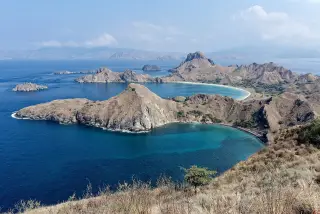
Labuan Bajo — Reef manta rays are a flagship attraction in Komodo National Park, and new research shows their movements and behavior are closely linked to popular tourism sites, underlining the need to manage visitor pressure in shallow coastal waters.
The reef manta ray, Mobula alfredi, is described in a 2022 study led by the Marine Megafauna Foundation and Murdoch University as a globally threatened species and an iconic tourist draw for visitors to Komodo. Using a decade-long photo-identification dataset collected between 2013 and 2018, the researchers identified 1,085 individual manta rays and documented how they use specific aggregation sites in and around the park.
The study, published in PeerJ on 16 May 2022, found that tourism boat visits to central manta sites increased by about 34 percent between 2014 and 2017. According to the authors, boats carrying 10 to 35 divers or snorkellers regularly visit sites such as Karang Makassar and Mawan, with central sites receiving most of the traffic. The paper recommends limiting the number of tourism boats present at aggregation sites at any one time and establishing mandatory codes of conduct for diving and snorkeling with mantas to reduce disturbance.
The overlap between manta habitat and shallow-water tourism is particularly clear at well-known locations such as Karang Makassar, Mawan and Manta Alley. The research reports strong site preferences and seasonal movements between these areas, including movements of roughly 35 kilometres between southern and central sites. Because many encounters occur in accessible, coastal waters, boat traffic, diver behavior and overcrowding can affect how animals use key feeding and cleaning areas, with implications for both conservation and the visitor experience.
Protection extends beyond single encounters
Indonesia granted full legal protection to manta rays in 2014 through Ministerial Decree No. 4/KEPMEN-KP/2014, which designates both Manta birostris and Manta alfredi as fully protected fish species throughout the country’s exclusive economic zone. Under this decree, catching or trading manta rays or their body parts is prohibited, with protection covering the animals’ entire life cycle.
Genetic research held in the IPB University repository indicates that reef manta populations in Raja Ampat, Komodo and Nusa Penida are closely connected. The study reports a low and non-significant genetic differentiation (Fst ≈ 0.036, p-value 0.170) among the three sampled populations, suggesting gene flow between regions and supporting the possibility of long-distance movements by individual mantas. That connectivity means local impacts in Komodo may have wider implications for manta conservation in Indonesia’s eastern seas.
At the regency level, WWF-Indonesia reports that West Manggarai issued Regent Regulation No. 18 of 2019 on 11 March 2019, establishing protection for sharks and manta rays as biodiversity and tourism assets. According to WWF-Indonesia, the regulation prohibits all shark species and manta rays from being caught, landed or used within the regency’s waters.
Tourism management and habitat pressures
WWF-Indonesia states that it has supported management of Komodo National Park since 2013 through programmes focused on marine protected areas, sustainable fisheries, sustainable tourism and threatened marine wildlife. The organisation reports that, together with the park authority, it has carried out carrying-capacity assessments for shark and manta diving sites, including locations such as Batu Bolong, Castle Rock, Crystal Rock, Golden Passage, Manta Alley, Karang Makassar (Makassar Reef), Mawan, Small Pengah, Big Tatawa and Caulderon.
These studies estimated daily capacities ranging from 10 to 319 people per day at shark sites and 52 to 365 people per day at manta encounter sites, aiming to guide tourism management that maintains both visitor comfort and ecosystem health.
Waste linked to the tourism economy adds another pressure. A waste-management study by WWF-Indonesia in 2017 estimated average daily waste generation in Labuan Bajo at about 112.4 cubic metres, equivalent to 12.8 tonnes per day, and about 12.18 cubic metres or 0.65 tonnes per day inside Komodo National Park.
WWF and local partners have responded with measures including a three-part recycling facility operated by the Komodo Waste Management Unit (KSU), coastal clean-ups and community education programmes. This work targets broader environmental conditions that underpin marine tourism, not only regulations at dive sites.
The movement and demographic data from the 2022 manta study, combined with national and local protection rules, highlight why tourism management is part of manta conservation in Komodo. Protecting key aggregation and feeding areas, limiting overcrowding and reducing pollution can help ensure that manta encounters remain both economically valuable and ecologically sustainable. For visitors and operators, following park guidance, using responsible boats and reducing waste are practical ways to support the habitat that makes seeing Komodo’s mantas possible.
Key points
- Species: Reef manta ray, Mobula alfredi, a globally threatened species and major tourist attraction in Komodo National Park.
- Study period: Photo-identification data collected from 2013 to 2018, published on 16 May 2022 in PeerJ.
- Tourism growth: Tourist boat visits to central manta sites increased by about 34 percent between 2014 and 2017.
- National protection: Ministerial Decree No. 4/KEPMEN-KP/2014 provides full protection to manta rays across Indonesia’s exclusive economic zone.
- Local regulation: Manggarai Barat Regent Regulation No. 18 of 2019 bans catching, landing and using sharks and manta rays as part of a tourism-focused conservation policy.
- Waste pressure: WWF-Indonesia’s 2017 study estimated daily waste generation of about 12.8 tonnes in Labuan Bajo and 0.65 tonnes in Komodo National Park.
Sources
- WWF-Indonesia SOSharks article on Komodo shark and manta protection
- PeerJ article: Residency, movement patterns, behavior and demographics of reef manta rays in Komodo National Park
- World Heritage Explorer research profile on Komodo National Park manta rays
- JDIH KKP entry for Ministerial Decree No. 4/KEPMEN-KP/2014
- IPB University thesis on genetic connectivity of Manta alfredi
- The Jakarta Post article on waste problems in Komodo National Park
- Mongabay article: Indonesia pledges to protect manta rays
Read next
More on this story
Wildlife
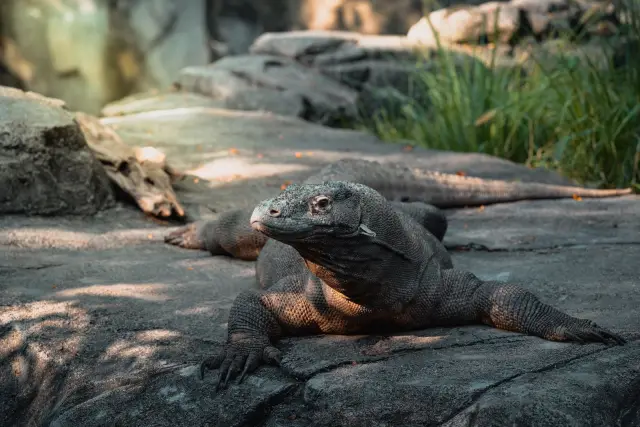
Are Komodo dragons venomous? What the science says
Komodo dragons are venomous lizards. Research has identified venom glands and toxins that help them weaken prey by lowering blood pressure and prevent…
Latest in Travel & Access
Today’s top story

Related