
Atadei geothermal dispute in Lembata intensifies amid concerns over green energy push
A local official’s move to restrict public opposition has escalated a dispute over the Atadei geothermal project in Lembata, highlighting how Indonesia’s push for “green” energy is reshaping communities and conservation debates across…
Editor: Mursyid Sonsang
· 3 min read
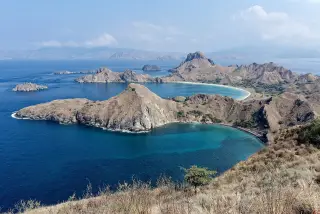
Lembata — A subdistrict head’s attempt to restrict public gatherings has intensified tensions in a long-running conflict over a geothermal power project in Atadei, Lembata, raising fresh questions about how Indonesia’s drive for “green” energy is reshaping communities and landscapes in the wider Flores region, including areas linked to Komodo National Park.
On 19 September 2026, Floresa.co reported that the Atadei subdistrict head (camat) issued a letter asking that community meetings and statements opposing the Atadei geothermal project be reported to the government and not held in houses of worship, a move that local groups condemned as an infringement on their rights to assemble and express opinions.
According to Floresa.co’s in-depth account, residents of Atadei have for months opposed the planned geothermal power plant, arguing that it threatens customary lands, water sources and ritual sites central to their identity.
The Atadei project forms part of a broader push to develop geothermal energy across Flores and Lembata, designated by national policymakers as a key region for Indonesia’s transition to lower-carbon electricity.
Floresa.co’s earlier reporting in June and July 2026 describes how the Ministry of Energy and Mineral Resources established multiple geothermal working areas across Flores and Lembata, and how state utility PLN’s long-term power supply plan for 2025–2034 prioritises several of these sites.
In Atadei, the government has set aside roughly 31,200 hectares for geothermal development, spanning Atakore, Nubahaeraka and Ile Kimok villages.
The planned Atadei plant is designed for a capacity of about 10 megawatts and is targeted to begin operating in 2027, according to Floresa.co’s reporting based on official planning documents and PLN statements.
Church leaders have become prominent voices in the debate.
In June 2026, the Bishop of Larantuka visited the Dapur Alam or Ina Kar area within the Atadei project zone and signed a document prohibiting any activity that would damage the site, framing the intervention as a defence of both the environment and spiritual heritage.
Civil society groups and local activists have warned that the combination of land acquisition, drilling infrastructure and access roads risks eroding forest cover, degrading water sources and weakening traditional environmental stewardship.
They argue that while geothermal power is promoted nationally as a clean energy solution, projects like Atadei illustrate how environmental and social costs can be concentrated in specific rural communities.
These geothermal conflicts add a new layer to conservation pressures in the wider Flores region, where marine and terrestrial ecosystems, including those linked to Komodo National Park, are already facing stress from tourism, fisheries and climate change.
Recent analysis by conservation outlet Mongabay highlights the importance of Komodo’s marine area as a stronghold for reef manta rays, noting that research has documented more than a thousand individual manta rays using the park’s waters and calling it one of the most significant known populations globally.
The same reporting underscores that despite a national ban on catching and trading manta rays since 2014, the species remains vulnerable to bycatch in fisheries, illegal fishing and habitat degradation driven by tourism and climate-related changes.
While the Atadei geothermal dispute is centred on land, not marine habitats, the debates over “green” energy, community rights and environmental safeguards in Lembata are part of a wider regional conversation about how development decisions affect the species and ecosystems that draw travellers, divers and conservation interest to Flores and the surrounding seas.
Sources
Read next
More on this story
Wildlife
Are Komodo dragons venomous? What the science says
Komodo dragons are venomous lizards. Research has identified venom glands and toxins that help them weaken prey by lowering blood pressure and prevent…
Latest in Flores & Beyond
Related