
What BMKG’s delayed rainy-season outlook means for Flores
BMKG says the 2026/2027 rainy season will arrive late across much of Indonesia as a very strong El Niño and the IOD reduce rainfall. Only a small part of East Nusa Tenggara is forecast to enter the season in November 2026.
By Mukmin John
· Event date: · 2 min read

Flores — BMKG, Indonesia’s Meteorology, Climatology and Geophysical Agency, says the 2026/2027 rainy season will begin later than the climatological average across 529 seasonal zones, or 61,08% of Indonesia’s land area.
BMKG attributes the delay to a very strong El Niño and the Indian Ocean Dipole (IOD), which together reduce rainfall and prolong dry conditions across much of Indonesia.
The agency’s national outlook says 185 seasonal zones, covering 24,66% of Indonesia’s land area, are expected to enter the rainy season in November 2026. A further 266 seasonal zones, covering 17,31% of the land area, are forecast to follow in December 2026.
BMKG records the sea-surface temperature anomaly in the central and eastern Pacific at +2,83 in August 2026. It reports an ENSO index of +2,20 for June–July–August 2026, indicating a very strong El Niño, and says the phase is expected to persist until early 2027.
Why the outlook matters for Flores
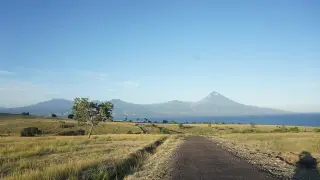
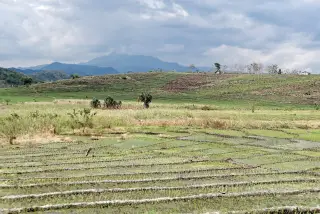
For Flores and the wider East Nusa Tenggara region, the forecast signals a later transition from dry to wet conditions rather than a single nationwide start date. BMKG’s detailed seasonal outlook identifies November 2026 as the start month for only a small part of East Nusa Tenggara, while much of Nusa Tenggara Timur is expected to enter the rainy season in December 2026.
BMKG also forecasts that the rainy season will be shorter than normal in 482 seasonal zones, representing 51,90% of Indonesia’s land area. Rainfall totals are nevertheless expected to remain in the normal category in 510 seasonal zones, or 69,76% of the land area.
The agency forecasts the national rainy-season peak in stages: December 2026 for 155 seasonal zones, January 2027 for 162, and February 2027 for 190. BMKG says the combined El Niño and IOD pattern is the reason the season is expected to arrive late and last for a shorter period.
Sources
Read next
More on this story

Flores & Beyond
Aftershock shakes Manggarai and Nagekeo
BMKG reported a shallow earthquake northeast of Manggarai on 3 November 2026. The tremor was felt in Manggarai and Nagekeo, with no tsunami potential.
Latest in Data
Related