

Studies Flag Passenger-Flow Pressure at Komodo Labuan Bajo Airport
Two studies on Komodo Labuan Bajo Airport point to crowding and terminal-capacity pressure, but the service-quality paper does not date its fieldwork. A separate planning paper and a later ERIA study provide traffic context.
Editor: Mursyid Sonsang
· Event date: · 4 min read
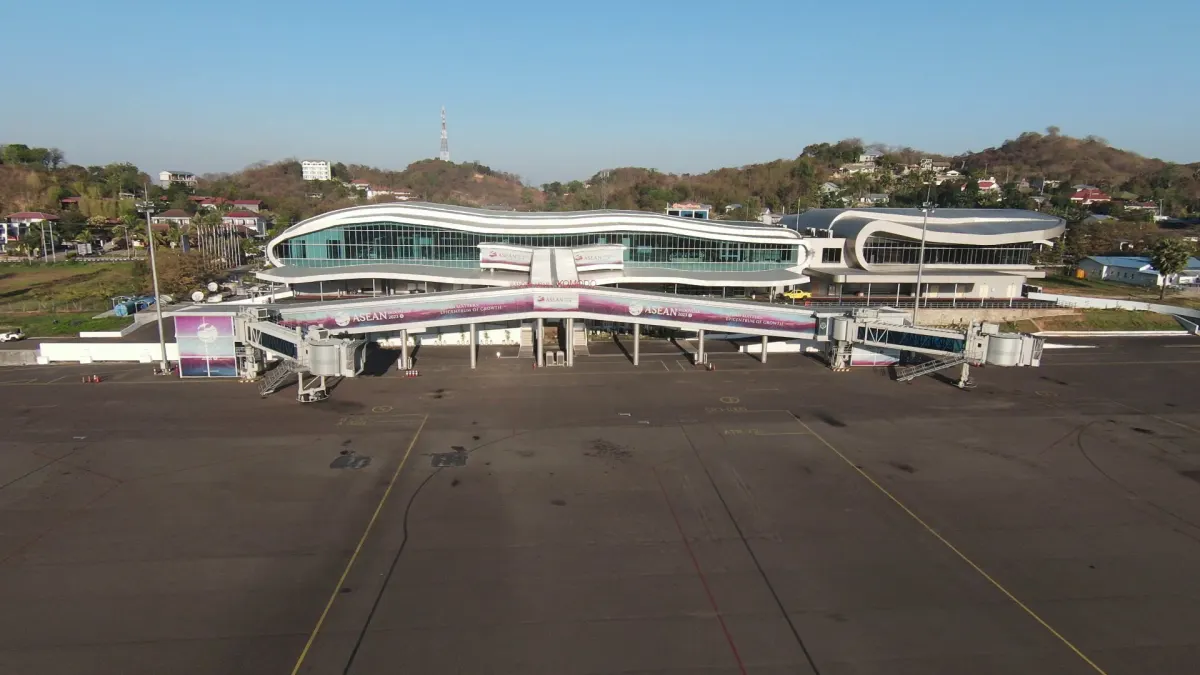
Labuan Bajo — A 2021 conference paper on service quality at Komodo Labuan Bajo Airport says frequent passenger accumulation was linked to limited terminal and aircraft capacity, but the study does not provide fieldwork dates. The paper is best read as evidence of a past service problem, not a verified measure of current congestion.
The study, published in the proceedings of the 4th International Conference on Applied Science and Technology on Engineering Science, was written by Anie Adrianti Tuati, Deasi D. A. A. Daud and Amy Wadu. It used Importance Performance Analysis, gap analysis and the Kano model to assess passenger perceptions of airport services.
According to the paper, the most negative service gaps were Wi-Fi and public internet access, trolley availability, and the cleanliness and comfort of the children’s playroom. The authors say these shortfalls showed airport services were not meeting passenger expectations.
The paper also says crowding was most evident in the area passengers use after arrival, including baggage claim, and recommends widening passenger-terminal capacity in that section to reduce accumulation. It cites an October total of 35,284 arriving passengers and 35,173 departing passengers in the background discussion.
A separate industry paper on Komodo Airport’s terminal needs says passenger numbers grew strongly from 2015 to 2019 and projects further terminal expansion requirements based on that trend. It states that the airport’s capacity was 712,000 passengers per year before later development raised it to 1.1 million passengers per year, and that 2019 traffic reached about 694,000 passengers, or 97.48% of the existing capacity.
More recent material also points to continued pressure on the airport as tourism recovered. A 2023 ERIA paper says Komodo Airport handled 610,014 passengers in 2022, about 56% of its then-available 1.1 million-passenger capacity, after the terminal expansion had been completed.
Taken together, the sources show that Komodo Airport has faced documented passenger-pressure concerns and capacity planning questions over time. They do not, however, establish a live queue problem on the specific date of this report, because neither source provides a contemporaneous observation period for the crowding described in the study.
What the study found
The service-quality paper says the largest negative gaps were for Wi-Fi and public internet access at minus 0.94, trolley availability at minus 0.75, and the children’s playroom at minus 0.68. In the paper’s framework, a negative gap means expectations exceeded perceived performance.
It also grouped five items as basic factors for satisfaction: terminal cleaning facilities, waiting-room seating capacity, terminal lighting, commercial areas and smoking-room facilities. That classification suggests the authors viewed these as essential amenities rather than optional extras.
The same paper argues the problem was not just amenities but passenger flow, saying congestion occurred because terminal and aircraft transport capacity were inadequate. It recommends expanding the passenger terminal, especially in the post-flight baggage-claim area.
The terminal-planning paper provides a broader capacity context. It says the airport development factors were influenced by aircraft movements and passenger numbers, and it projects that demand could require additional terminal space in the future. The paper’s calculations indicate a need for expanded terminal area beyond the existing design capacity in its planning horizon.
For travellers, the practical takeaway is that baggage claim, seating, trolley access and internet access are the specific pinch points identified in the studies. The papers do not provide current waiting times, live flight data or a day-by-day operational forecast.
Context
Komodo Airport is the main air gateway to Labuan Bajo and the Komodo National Park area. The sources reviewed describe it as a major tourism gateway whose traffic has risen over time with the growth of visits to West Manggarai and the surrounding islands.
One paper cites monthly passenger figures of 35,284 arrivals and 35,173 departures, while the later planning studies show the airport’s annual capacity rising from 712,000 to 1.1 million passengers. Together, they show why passenger-flow management has been a recurring issue for the airport.
Sources
Next story

BNPB monitors ground movement threat in Nampar Macing, West Manggarai
Indonesia’s disaster agency BNPB says ground movement in Nampar Macing village, Sano Nggoang, has threatened about 200 residents and severely damaged…
Related