

Labuan Bajo weighs diversification as pressure on Komodo grows
Labuan Bajo officials, researchers and tourism strategist Taufan Rahmadi have all urged diversification beyond Komodo National Park.
Editor: Mursyid Sonsang
· Event date: · 4 min read
Labuan Bajo — Tourism diversification in and around Labuan Bajo is increasingly being discussed as a way to ease pressure on Komodo National Park, but recent proposals focus on broad strategies rather than a fixed list of new sites or a detailed timetable for development.
In public commentary over the past several years, tourism strategist Taufan Rahmadi has argued that Labuan Bajo should not be marketed only as a gateway to Komodo but as a wider destination with multiple attractions on land and at sea, supported by clear policies and community-based tourism programs.
In an earlier intervention on Komodo ticket policy, he outlined a framework using policy reform, destination improvement, stakeholder collaboration and sustainability targets to ensure tourism benefits are shared while environmental impacts are kept within acceptable limits. He urged authorities to strengthen facilities, access and service standards at a range of attractions beyond Komodo Island, and to involve local communities more closely in tourism planning and delivery.
Pressure on Komodo and the search for alternatives
Concerns about concentrated visitor numbers in Komodo National Park have led both researchers and local officials to call for the development of alternative destinations and thematic routes outside the park’s core zones.
An academic paper on sustainable tourism and terrestrial ecosystem conservation around Komodo National Park recommends a dynamic visitor management system, including online reservations, data-driven carrying capacity models and variable pricing, to align visitor numbers with environmental limits. The same study proposes thematic ecotourism routes outside core conservation zones and community-based cultural tourism in surrounding villages as ways to distribute demand and income.
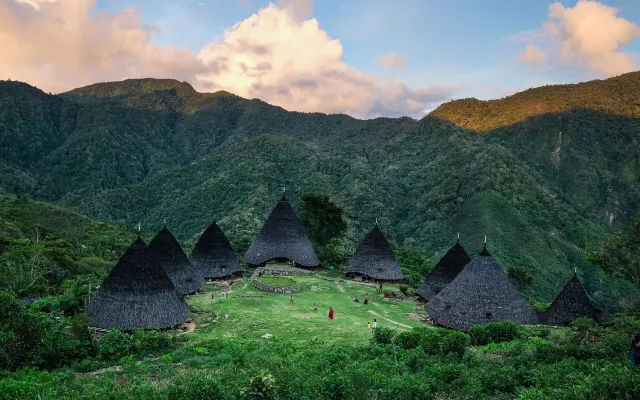
Local tourism authorities have also highlighted several land-based alternatives around Labuan Bajo, such as Batu Cermin Cave, Puncak Waringin and agrotourism in Ngalor Kalo, as well as cultural experiences in traditional villages near the town. These sites are promoted as options for visitors when marine trips are restricted by weather or other factors, and as complementary stops that can reduce reliance on island-hopping alone.
Emerging priorities for diversification
Across policy drafts, research and expert commentary, three broad priorities recur.
First is connectivity. Draft national tourism planning documents for Labuan Bajo describe diversification through the development of new destinations beyond the main Komodo tourism area, supported by improved transport links so visitors can reach a wider range of sites on Flores and nearby islands. Reliable access by road and sea is framed as essential for spreading visits while keeping itineraries viable.
Second is the quality and identity of local products. Studies of Labuan Bajo’s land tourism and cultural attractions underline the potential of caves, viewpoints, village landscapes and Manggarai cultural performances to complement marine tourism, provided they are branded and curated around strong local narratives rather than treated as interchangeable stops.
Third is human resource capacity. Research on ecotourism development around Komodo National Park calls for certification programs and training for tour operators, guides and accommodation providers, so that community-based products meet consistent service and sustainability standards. This is seen as a prerequisite for ensuring that additional tourism spending reaches local businesses and residents near new and existing destinations.
Managing growth, not just adding sites
The diversification discussion is closely linked to how visitor flows in Komodo National Park itself are managed. Academic proposals for the area suggest that new attractions should be accompanied by stronger monitoring, zoning and dynamic pricing tools that adjust to ecosystem conditions, rather than relying solely on fixed quotas or broad caps on arrivals.
Under such models, pricing and reservation systems could vary by season, zone or activity to influence demand and steer visitors toward less sensitive areas, with the stated aim of protecting habitats while maintaining a viable tourism economy. Researchers also emphasise the need for environmental education for visitors and communities, but as a complement to clear rules, enforcement and scientific monitoring, not as a substitute.
While several land-based and cultural destinations around Labuan Bajo are already operating and promoted as alternatives, publicly available documents and reporting do not yet establish a comprehensive, officially approved list of new sites designated specifically as “pressure relief” areas for Komodo, nor do they present a single, integrated carrying-capacity plan already in force across the wider tourism system.
Sources
- Republika Online – "Pengamat Pariwisata Kritik Pembangunan di Pulau Komodo"
- Pos-Kupang / Tribun Network – "Selesaikan Konflik Taman Nasional Komodo (TNK) dengan PDKT"
- Jurnal Ilmiah – "Pengembangan Wisata Berkelanjutan dan Konservasi Ekosistem Darat di ..."
- Repository STIPRAM Yogyakarta – Lampiran Rancangan Peraturan Presiden RIDPN Labuan Bajo
- Labuan Bajo Today – "Kapal Wisata Ditutup, Sejumlah Destinasi Darat Labuan Bajo Tetap Beroperasi"
- Academia.edu – "Inventarisasi Peluang Pengembangan Atraksi Budaya Komodo dan Manggarai di Labuan Bajo, Manggarai Barat"
- Garuda – "Wisata Darat Labuan Bajo"
Next story
Manggarai Barat Restricts Official Activity in 64 Election Villages
Manggarai Barat has barred official government activity in villages holding simultaneous village-head elections from Sept. 23-29, 2026, while keeping…
Related