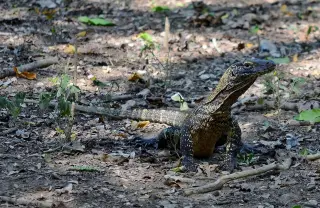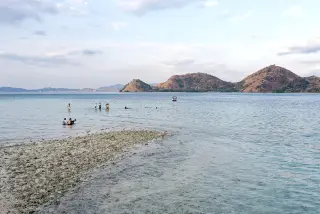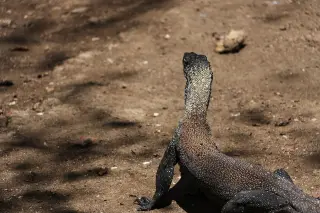

KSDAE model maps 120.23 hectares of Komodo prey habitat on Longos Island
A KSDAE assessment using Maxent modelling reports that 120.23 hectares, or 25.1 percent of Longos Island, is suitable habitat for Komodo dragon prey, highlighting the island’s role in supporting Komodo populations beyond the main national…
Editor: Mursyid Sonsang
· Event date: · 4 min read
Labuan Bajo — A habitat assessment by Indonesia’s Directorate General of Natural Resources and Ecosystem Conservation (KSDAE) using Maxent modelling identified 120.23 hectares on Longos Island as suitable habitat for Komodo dragon prey, equivalent to 25.1 percent of the island’s area.
The modelling is part of a KSDAE prey animal inventory and habitat assessment for Longos Island, which lies off the north coast of Flores and hosts Komodo dragons outside the better-known national park islands. According to the assessment, Longos Island has been recognised as a preservation area under Indonesia’s efforts to establish conservation sites beyond formal protected areas.
Modelled habitat on Longos Island
The KSDAE assessment reports that Maxent modelling identified 120.23 hectares of land on Longos Island as suitable for the presence of Komodo prey animals, representing 25.1 percent of the island’s area. Within this suitable area, the model distinguishes three classes of habitat suitability: 24.5 percent (29.45 hectares) classified as low suitability, 48.2 percent (57.99 hectares) medium suitability, and 27.3 percent (32.79 hectares) high suitability.
KSDAE’s wider In-Flores programme notes that Longos Island covers roughly 504 hectares and has been designated as a preservation area (other effective area-based conservation measure, or OECM) based on completed inventory, identification and verification processes. Independent data from the Komodo Survival Program describe Longos as a 478-hectare island located about 500 metres off the north coast of Flores, with dry monsoon forest, small teak and lamtoro plantations, and healthy mangrove stands. Differences in reported island size reflect the use of different datasets and mapping references.
How the figure should be read
The 120.23-hectare estimate is a modelled area of suitable habitat, not a count of prey animals or a direct measurement of prey abundance. According to the KSDAE assessment, the modelling uses Maxent, a species distribution modelling approach that predicts habitat suitability from environmental variables and known occurrences, rather than from a full census of animals in every part of the island.
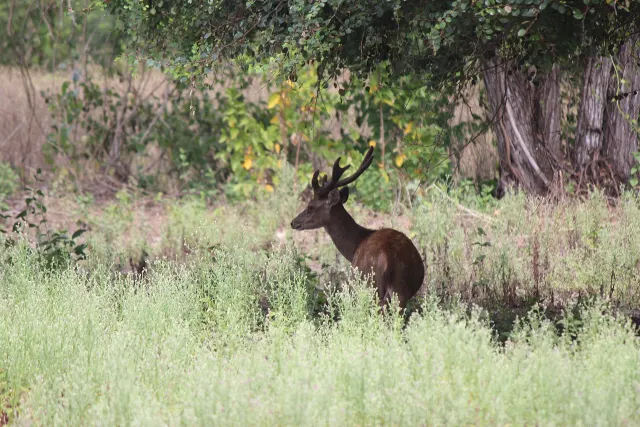
Other KSDAE documents and Komodo conservation reports emphasise that Komodo dragons typically use coastal valleys, open deciduous monsoon forest and surrounding savannas, habitats that also support prey species such as Timor deer, water buffalo, wild boar, long-tailed macaques and feral horses. On Longos Island, KSDAE and Komodo conservation materials highlight dry forest and mangrove ecosystems, suggesting that suitable prey habitat there is linked to these habitat types and nearby savanna or grazing areas.
Role in broader Komodo conservation
KSDAE’s conservation strategy identifies Longos Island as part of the broader distribution of Komodo dragons outside the core Komodo National Park islands, alongside pockets on the north and west coasts of Flores. The Longos prey habitat model therefore contributes to understanding how much of the island can support prey populations that, in turn, sustain Komodo dragons in this off-park landscape.
Komodo conservation organisations note that Komodo dragons depend heavily on large mammals such as Timor deer (Cervus timorensis) and water buffalo (Bubalus bubalis), with wild boar, feral horses and long-tailed macaques acting as alternative prey. Ensuring adequate habitat for these species is a key part of maintaining viable Komodo populations beyond the main tourist sites.
Within Indonesia’s conservation planning, Longos Island has been identified as a reserve or preservation area in provincial marine spatial planning and KSDAE’s In-Flores indicators, reflecting its ecological importance and the presence of Komodo dragons and their prey. The reported 120.23-hectare figure offers a quantified basis for local habitat management on Longos Island, including future field verification, monitoring and potential refinement of conservation zoning.
Sources
Next story
Komodo tide forecasts for 20 September show three key turning points
Multiple tide-forecast platforms list three main turning points for Komodo on Sunday, 20 September 2026, with one low-water period around midday.
Related