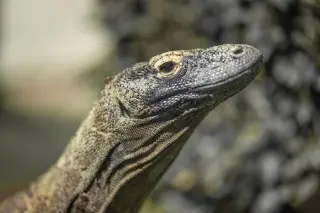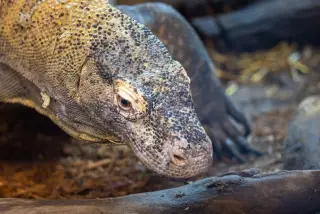

Komodo dragon Thailand: do they live there, or is it a confusion?
Komodo dragons are not native to Thailand. Thai references usually involve trafficking cases or mistaken identity with monitor lizards common in parks and waterways.
Editor: Mursyid Sonsang
· 3 min read

Komodo dragons do not live naturally in Thailand; they are native to a few Indonesian islands, including Komodo, Rinca, Flores and Gili Motang. In Thailand, reports about Komodo dragons usually refer to smuggling cases, zoo animals, or confusion with large monitor lizards that are common in the country.
Do Komodo dragons live in Thailand?
No. The Smithsonian’s National Zoo says Komodo dragons are limited to a few Indonesian islands, while UNESCO’s Komodo National Park page places the species in Indonesia’s island chain, not Thailand.
That is why a sighting in Thailand is far more likely to be a different reptile, especially an Asian water monitor or another monitor lizard species. Lumpini Park in Bangkok, for example, says its reptiles are Asian water monitors, not Komodo dragons.
Why do people connect Komodo dragons with Thailand?
The main reason is wildlife trafficking. In April 2026, Indonesian authorities said they had arrested six people over alleged smuggling of Komodo dragons bound for Thailand, and Mongabay reported that the case involved at least 17 animals moved between January 2025 and February 2026.
Those reports show that Thailand can appear in Komodo dragon news even though the species is not native there. The trade is illegal: the Wildlife Friends Foundation Thailand said the species had not been legally imported into Thailand under CITES, and the report described the animals found in a private facility as illegally imported.
What do official and conservation sources say about the species?
UNESCO says the Komodo National Park population is estimated at around 5,700 individuals, distributed across Komodo, Rinca, Gili Motong and parts of western and northern Flores.
Smithsonian also identifies the species as the world’s largest living lizard and says its natural range is restricted to a few Indonesian islands. That narrow range is why conservation and enforcement around the species are so closely tied to Indonesia rather than Thailand.
What should travelers in Thailand assume if they see a huge lizard?
In Thailand, a large lizard near water is usually a monitor lizard, not a Komodo dragon. Bangkok park guidance says Lumpini Park’s animals are Asian water monitors, and another Thailand-based guide notes Komodo dragons are not native to Thailand.
- Komodo dragons are native to Indonesia, not Thailand.
- Thailand-linked Komodo news in 2026 involved alleged trafficking, not wild populations.
- Large lizards seen in Thai parks are usually monitor lizards, including Asian water monitors.
If the question is whether Thailand has wild Komodo dragons, the answer is no; if it is whether Komodo dragons are discussed in Thailand, the answer is yes, mostly because of illegal wildlife trade cases and mistaken identity.
Sources
Read next
More on this story
Wildlife
Komodo dragon Australia: what the name really means
Searchers typing “komodo dragon australia” are usually asking whether the species lives in Australia now or only once did.
Most read in Komodo National Park
Today’s top story

Related