
2019 Komodo reef survey logged 182 target fish per 350m²
A June 2019 reef-fish survey in Komodo National Park recorded average densities of 182 target fish and 35 indicator fish per 350m² at its study sites, offering a baseline for sampled reefs rather than a park-wide measure of marine health.
Editor: Mursyid Sonsang
· Event date: · 4 min read
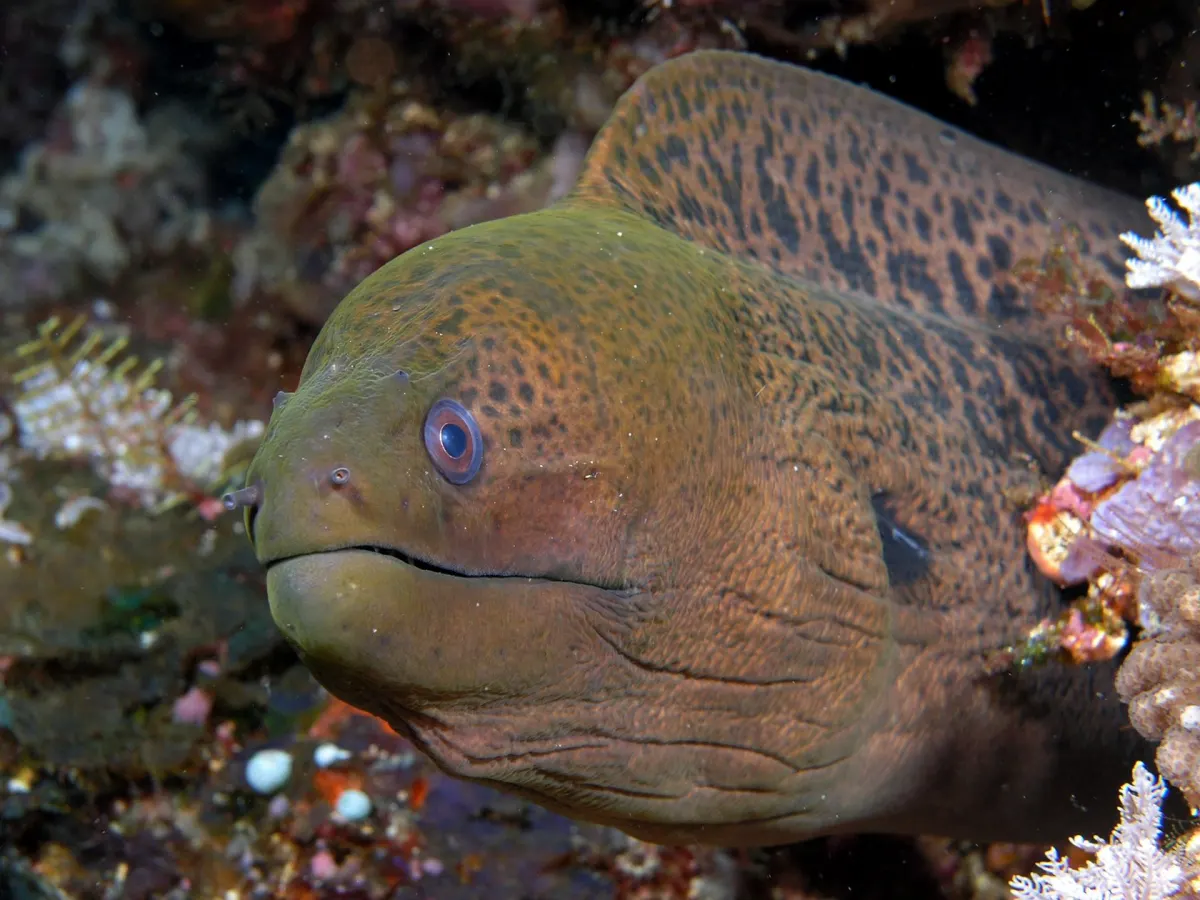
Labuan Bajo — A reef-fish survey carried out in June 2019 in the waters of Komodo National Park recorded an average density of 182 target reef fish per 350 square metres and 35 indicator reef fish per 350 square metres at the study stations, describing only the sampled sites rather than the entire marine area of the park.
The findings were published in 2020 in the Jurnal Penelitian Perikanan Indonesia under the title “Characteristics of Community Structures for Target and Indicator Reef Fishes in the Waters of Komodo National Park” by Ayuningtyas Indrawati, Isa Nagib Edrus and Tri Aryono Hadi.
According to the paper, researchers conducted underwater visual censuses along permanent belt transects at each study station in June 2019 to document reef-fish composition, distribution, stock density and biomass.
Komodo National Park’s marine zone is much larger than the survey footprint: a separate environmental assessment and monitoring reports note that hundreds of sites inside and around the park have been used for coral and fish monitoring over the years, underscoring that conditions can vary widely between locations.
What the numbers measure
The 2019 study reported 128 target reef-fish species from 21 families and 30 indicator species from the butterflyfish family Chaetodontidae.
Average target-fish biomass was estimated at 1,174 kilograms per hectare, with variation of 617 kilograms per hectare around that mean.
The authors defined target fish as economically important reef fishes whose densities and biomass help describe community structure and fishing pressure, while indicator fish are species whose presence, abundance and distribution can signal reef condition, including habitat fertility and coral status.
The most frequently recorded fish lengths were between 15 and 30 centimetres, reflecting the size structure of the observed populations.
Only a small subset of species showed broad distribution across the study sites: the paper notes that just 13 target species and two indicator species occurred widely, while most species had more restricted ranges.
The headline results reported by the authors are:
- Target-fish density: 182 ± 67 individuals per 350 square metres.
- Indicator-fish density: 35 ± 15 individuals per 350 square metres.
- Target-fish biomass: 1,174 ± 617 kilograms per hectare.
- Recorded species: 128 target species and 30 indicator species.
The plus-or-minus values express variation around the averages and do not by themselves establish a trend, as the study describes a single survey period rather than repeated monitoring at the same stations.
Why site coverage changes the interpretation
The researchers reported high overall reef-fish diversity when all study sites were pooled, but lower diversity at individual sites, reflecting uneven species distribution and local habitat differences.
For target fish, the paper classified 3 percent of species as having very high distribution, 7 percent high, 18 percent moderate, 21 percent low and 51 percent very low distribution, indicating that most target species were recorded in few locations.
For indicator fish, 7 percent of species fell in the very high or high distribution categories, 23 percent were moderate, 40 percent low and 23 percent very low.
Other monitoring work in Komodo’s reefs has documented substantial spatial variation in coral cover and fish biomass, with some areas showing live hard-coral cover below 25 percent and others higher, depending on exposure, management zone and reef type.
Earlier surveys linked damaged coral and uneven fish biomass to pressures including destructive fishing, anchoring, fishing intensity, strong currents and reef-substrate structure, demonstrating how local conditions can shape reef-fish communities.
Context for tourism and conservation
Komodo’s marine waters support fisheries and marine tourism, and long-term monitoring programs have been used to track coral cover, fish biomass and reef rehabilitation inside and outside the park.
Studies in the late 1990s reported increases in live hard-coral cover at monitored sites between 1996 and 1998, alongside reductions in coral mortality coefficients, suggesting a halt to widespread coral destruction and gradual reef recovery under improved management.
Subsequent work on reef restoration, including placing rock piles on rubble fields, has found that rehabilitated substrates can support higher hard-coral growth and greater numbers and diversity of reef fish than adjacent rubble areas.
Against this background, the June 2019 fish survey provides a detailed baseline for the sampled Komodo stations — documenting densities, biomass, species composition and distribution — but cannot on its own show whether reef-fish populations across the entire conservation area are improving, declining or stable.
Sources
- Garuda – abstract and metadata for Jurnal Penelitian Perikanan Indonesia article on Komodo reef fish
- Academia.edu – Karakteristik Struktur Komunitas Ikan Karang Target dan Indikator di Perairan Taman Nasional Komodo
- IPB Repository – Increased Coral Cover in Komodo National Park, Indonesia: Monitoring for Management Relevance
- SEESDGJ journal article referencing Indrawati et al. 2020
- SciSpace – Reef fish community structure in the islands of Paraja Bay (references section)
- Komodo NP ecotourism review PDF citing Indrawati et al. 2020
- Komodo National Park – Monitoring and Research page
- Status of Coral Reefs in and around Komodo National Park: 2009 (report)
- Komodo National Park profile PDF
- Conservation Evidence – Rock piles for coral reef restoration in Komodo National Park
- Jurnal Penelitian Perikanan Indonesia — “Characteristics of Community Structures for Target and Indicator Reef Fishes in the Waters of Komodo National Park”
Next story
Komodo solar desalination plant documented at 5 m³ daily output
A solar-powered desalination plant on Papagarang island in Komodo National Park is documented as producing around five cubic metres of drinking water…
Related