
Survey at Kampung Rinca shoreline logs 318.8 kg of marine debris
A shoreline survey at Kampung Rinca in Komodo National Park documented 318.8 kilograms of marine debris, dominated by plastic and organic waste, and classified it into eight material categories to inform future waste management efforts.
Editor: Mursyid Sonsang
· Event date: · 4 min read
Labuan Bajo — — A coastal waste survey on the shoreline of Kampung Rinca in Komodo National Park documented 318.8 kilograms of marine debris and classified it into eight material categories, according to a summary published by the park authority and the Environment and Forestry Ministry.
The survey was carried out by Komodo National Park staff member Abdul Hamid, who identified waste types using a material-based classification and recorded both percentage by weight and item density for each category, according to the park’s website and a related article on the ministry’s conservation directorate site.
According to those reports, the eight categories comprised organic waste, textiles, rubber, plastic, metal, glass, paper, styrofoam and discarded fishing nets. The sources state that the total weight of waste recorded along the surveyed shoreline reached at least 318.8 kilograms.
Composition and density of coastal waste
The park’s summary notes that plastic-based waste accounted for 27.6 percent of the total weight, making it the single largest category by weight in the inventory. Item density for plastic waste was reported at 0.004 items per square metre along the surveyed shoreline.
Organic waste was the second-largest category, representing 26.9 percent of the total weight, with a reported item density of 0.043 items per square metre. Styrofoam and discarded fishing nets each contributed 2.8 percent of the total weight, with a stated density of 0.0045 items per square metre.
In addition to these categories, the survey also identified smaller shares of textiles, rubber, metal, glass and paper in the total load, although the available public summaries do not provide full percentage figures for each of these remaining materials.
Possible sources of waste
Based on direct observation during the survey, park staff concluded that most of the debris found on the Kampung Rinca shoreline originated from local community activities, nature-based tourism and floating waste carried in by currents. The report describes this floating component as floatsam, meaning waste transported by sea rather than generated directly on the beach.
The ministry’s conservation directorate article presents the Kampung Rinca findings as part of broader efforts to understand how solid waste reaches communities and shorelines within Komodo National Park. Previous studies and advocacy work by conservation organisations have highlighted the role of tourism, public facilities and residential areas in generating inorganic waste that can end up in park waters if not properly managed.
Implications for waste management
The Kampung Rinca inventory adds a material-level breakdown to existing concerns over marine debris in and around the park, showing that plastic and organic waste together dominate the recorded load, with smaller but notable contributions from styrofoam and fishing gear.
According to the ministry’s article, the identification of waste types and their relative shares is intended to support subsequent planning for waste handling and prevention in the village and along nearby shorelines. However, the available public summaries do not detail specific follow-up measures, such as changes to collection schedules, infrastructure or enforcement, that may have been taken in direct response to this particular survey.
Regional and national studies cited by conservation organisations have previously estimated that waste generated in Labuan Bajo and Komodo National Park includes a high proportion of inorganic materials such as plastic, glass and cans, and that significant volumes can enter coastal waters or strand on beaches when collection systems are incomplete. The Kampung Rinca shoreline figures therefore contribute local, site-specific data to an already documented wider waste management challenge.
Context
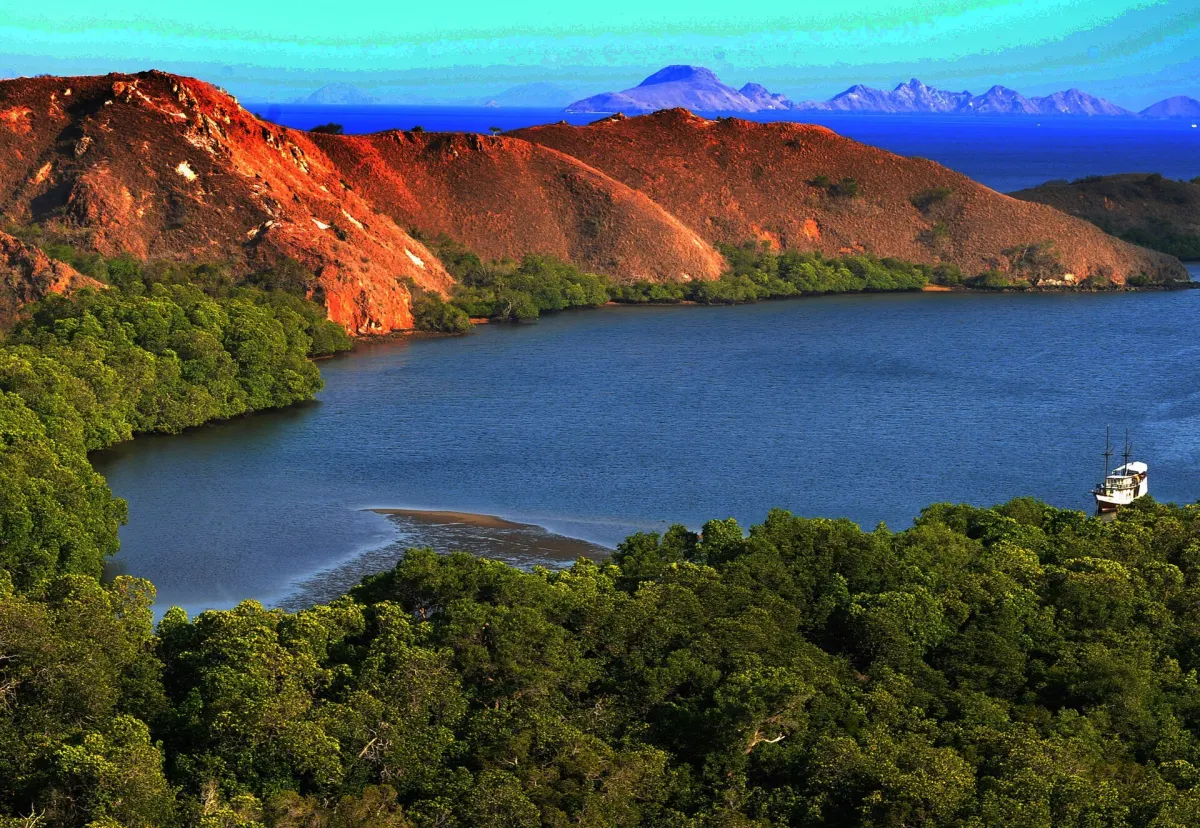
Kampung Rinca is a village area within the wider Komodo National Park in East Nusa Tenggara, Indonesia, where coastal communities depend on fisheries and tourism-related livelihoods. The documented 318.8 kilograms of waste along its shoreline illustrate how marine debris accumulates at the interface between settlement, tourism activity and protected-area ecosystems.
The park authority and conservation agencies have previously reported cleanup campaigns and waste studies across other parts of Komodo National Park and Labuan Bajo, indicating that shoreline waste and plastic pollution remain recurring issues that require both local and systemic responses.
Sources
- Komodo National Park official website – "Identifikasi Jenis Sampah di Pesisir Kampung Rinca"
- Directorate General of Natural Resources and Ecosystem Conservation (KSDAE), Ministry of Environment and Forestry – "Identifikasi Jenis Sampah di Pesisir Kampun
- WWF-Indonesia – "WHERE DOES OUR WASTE GO?"
- The Jakarta Post – "Trash still huge problem in Indonesia’s national parks"
Next story
Police detail Komodo trafficking arrests in East Manggarai
Police in East Java and East Nusa Tenggara say they have arrested two men from East Manggarai who allegedly helped supply Komodo dragons from Flores t…
Related