

Pulau Kalong’s Flying Foxes Paint the Komodo Sunset Sky
Pulau Kalong, a mangrove-clad islet between Rinca and Papagarang in Komodo National Park, offers a boat-based sunset view of thousands of flying foxes leaving their roosts.
Editor: Mursyid Sonsang
· 4 min read
Labuan Bajo — At dusk, tens of thousands of flying foxes rise from the mangrove canopy of Pulau Kalong and stream across the sky, making the small “bat island” one of the most distinctive sunset boat stops near Labuan Bajo in Komodo National Park.
Pulau Kalong, also known as Kalong Island or Koaba Island, is a low-lying, mangrove-covered islet that serves as a daytime roost for large fruit bats commonly called flying foxes, according to regional tourism descriptions and operator guides.
The island lies on the route from Labuan Bajo toward Rinca Island and Papagarang, and is typically visited by boat as part of a wider Komodo National Park itinerary. Commercial operators and travel sites describe journey times from Labuan Bajo of roughly 30 minutes to one hour by boat, depending on vessel and conditions.
What visitors can expect
In Indonesian, kalong refers to flying foxes, and the island is named for the bat colony that roosts in its mangrove trees. The bats spend the day hanging in dense clusters in the canopy before becoming active as sunset approaches.
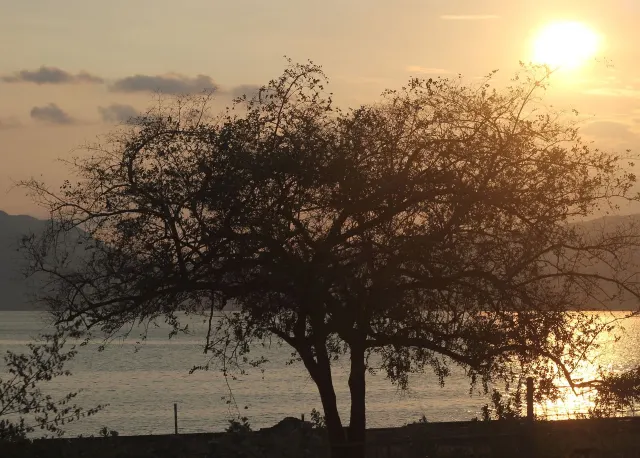
Tour itineraries and visitor accounts consistently describe the main experience as a timed sunset stop from the water rather than a shore excursion. Boats anchor offshore at a respectful distance, giving passengers a clear view as the sky shifts from blue to amber to deep crimson and the bats begin to take flight in continuous streams across the horizon.
Travel guides and booking platforms state that the bat emergence occurs daily around sunset and is visible year-round. Several operators describe peak activity starting roughly between 17:30 and 18:30 WITA, depending on the season and local sunset time, with the most dramatic flight often occurring 15–30 minutes after sunset.
Visitor-oriented sites note that the spectacle can last 30–90 minutes, as waves of bats leave the island to forage over nearby islands and the Flores coast throughout the night.
Trip details and timing
Multiple travel resources place Kalong Island between Rinca and Papagarang and identify it as a standard sunset stop in Komodo boat tours, including day trips and multi-day liveaboard itineraries. Some sources describe it as roughly 8–20 kilometers from Labuan Bajo, or about 30–60 minutes by boat.
Tour descriptions commonly schedule the sunset segment at Kalong Island for late afternoon or early evening, for example around 17:15 local time on packaged itineraries. Guides emphasize that exact viewing times vary with season, weather and individual boat schedules, and advise travelers to confirm departure and return times directly with operators.
Because the bat emergence is tied to sunset, visitors planning a specific date, such as mid-September, are encouraged by local operators and resort guides to seek current information on sunset time, sea conditions and park regulations rather than relying on a fixed clock interval.
Access, rules and conservation
Kalong Island is described as uninhabited and covered in mangrove forest, which provides the roosting habitat for the bats. Tourism operators and resort briefings consistently state that landing on the island is generally not permitted in order to protect the fragile mangrove ecosystem and avoid disturbing the bat colony.
Instead, boats anchor 50–100 meters offshore, and visitors observe from the deck in low light as the bats depart. Several guides highlight the importance of keeping noise to a minimum, following crew instructions and avoiding bright lights or sudden movements that could disrupt the animals.
Travel advisories and operator notes recommend that visitors confirm boat capacity, safety equipment, meeting point, and payment terms in advance, particularly for evening outings that return after dark. As the site lies within Komodo National Park, trips are generally organized through licensed operators who handle park permits and guiding arrangements as part of broader itineraries.
The appeal of Pulau Kalong, according to regional tourism materials and operator guides, lies in witnessing a daily natural routine rather than a staged show: a quiet boat, a changing sky and a river of bats lifting out of the mangroves and disappearing toward the surrounding islands at nightfall.
Sources
- Labuan Bajo Luxury – Kalong Island Labuan Bajo — Flying Fox Sunset Spectacle Guide
- Komodo Luxury – Kalong Island Komodo: Flying Foxes Sunset 2026
- Komodo Resort – Kalong Island: Flying Fox Sunset in Komodo
- Indonesia Tourism – Kalong Island
- Lasha Cruise – Kalong Island Flying Foxes — Komodo's Sunset Bat Exodus
- GetYourGuide – Pulau Kalong, East Nusa Tenggara – Book Tickets & Tours
- Airial Travel – Kalong Island Labuan Bajo (2025)
- TripAdvisor – Kalong (Flying Foxes) Island
- Traveloka – Pulau Kalong: Fenomena Alam Ribuan Kelelawar di Senja Labuan Bajo
- Indonesia Juara – Liburan Unik ke Pulau Kalong, Langit Senja dan Kelelawar
- Antavaya Blog – 12 Aktivitas Seru di Labuan Bajo yang Wajib Kamu Coba
- Kupang Tribunnews
Next story
East Flores Timpora meeting bolsters foreign‑visitor monitoring
A coordination meeting led by the Sikka Class II Immigration Office in East Flores on 17 September 2026 brought local government, law‑enforcement and…