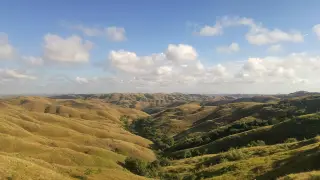

Patawang’s Hijau Manise agrotourism gains recognition, future growth eyed
Patawang Village in East Sumba has become a self-sufficient, conservation-focused agrotourism destination with support from PT Muria Sumba Manis’s Hijau Manise program.
Editor: Mursyid Sonsang
· Event date: · 5 min read
Waingapu — Patawang Village in East Sumba has been reshaped into an agrotourism destination through the “Hijau Manise” greening program of PT Muria Sumba Manis (MSM), and its village head, Imanuel Soleman, is now calling for continued collaboration to deepen the benefits of the initiative for local residents, according to several Indonesian media reports.
Patawang, in Umalulu sub-district, was still classified as a “developing village” in 2022 but has since risen to “self-sufficient” (mandiri) status in 2025, aided in part by MSM’s environmental and community programs, according to coverage of the Hijau Manise initiative by a national business news outlet and lifestyle media.
MSM, an agribusiness and sugar-cane company operating in East Sumba, launched Hijau Manise in early January 2024 in partnership with the Indonesian Social Sustainability Forum (ISSF), Patawang’s village government and the local tourism-awareness group (Pokdarwis), according to a regional news report. The program combines tree planting with community-based activities in Patawang’s agrotourism area, church land and household yards.
Agrotourism as conservation and education
Reports describe Agrowisata Patawang as a green, conservation-focused site laid out with productive trees, fruit plants and vegetable plots, intended both as a local source of income and a setting for environmental education. Children from the village have joined planting and gardening sessions at the site to learn about vegetable farming and the importance of caring for the land, according to a March 2025 article that quoted Soleman’s remarks during one such activity.
According to that report, Soleman expressed his appreciation for MSM’s corporate social responsibility support and said the company’s assistance had helped the agrotourism area grow into a space “filled with trees, fruit and vegetable crops.” The same coverage described Agrowisata Patawang as part of the environmental pillar of Hijau Manise and highlighted its role as an educational tourism destination where visitors can observe local agricultural and plantation practices.
Several outlets note that Patawang’s agrotourism area is framed as both a conservation zone and a driver of the village economy, allowing residents to earn additional income from tourism and micro-enterprises around the site. A broadcast-focused business channel reported that Hijau Manise helped Patawang become the only village in East Sumba to reach self-sufficient status in 2025, and described agrotourism as a new source of income for the community.
Village status and national recognition
Media reports on the CSR & Sustainable Village Development (CSR & PDB) Awards 2025 say Hijau Manise received a Gold Award from Indonesia’s Ministry of Villages, Development of Disadvantaged Regions and Transmigration in partnership with ISSF. ISSF’s chair and MSM representatives have linked this recognition directly to the program’s contribution to raising Patawang’s status from developing to self-sufficient village.
Coverage of the awards explains that the national program assesses how corporate social responsibility initiatives help improve village development indices, moving communities from disadvantaged to developing, then advanced and eventually self-sufficient status. In this context, Patawang is cited as a case where collaboration among the company, government and residents has accelerated progress.
Community hopes and ongoing collaboration
While recent articles highlight Soleman’s public support for Hijau Manise and his call for active cooperation between MSM and villagers in managing Agrowisata Patawang, they do not detail a formal, costed expansion plan for the tourism area. The reports focus instead on current activities: tree-planting campaigns, environmental education with local schools and efforts to build Patawang’s profile as a green, community-based destination.
In earlier interviews, Soleman has also spoken about broader economic pressures facing Patawang, including constraints on village funds and outstanding construction and wage payments linked to national village-finance rules. These comments underscore why local leaders are seeking sustainable ways to strengthen livelihoods, including through tourism and agribusiness partnerships.
For now, Agrowisata Patawang stands as a rural tourism site centered on agriculture, conservation and education, supported by MSM’s Hijau Manise program and local community groups. Any future enlargement of the agrotourism zone, its budget and land arrangements have yet to be set out in public documents or detailed by district or provincial authorities in the available reporting.
Sources
- Media Indonesia – Bangun Desa Berkelanjutan di Sumba Timur, PT Muria Sumba Manis (MSM) Diganjar Penghargaan
- Suara.com – Sumba Lebih dari Sekadar Indah: Intip Desa Patawang, Simbol Harapan dan Keberlanjutan
- Disway.id – Pelesir ke Desa Patawang, Menikmati Agrowisata Hijau di Jantung Sumba Timur
- TIMES Indonesia – Anak-anak Desa Patawang Sumba Timur Ikut Belajar Menanam di Agrowisata Patawang
- IDX Channel – Muria Sumba Manis Dukung Pemberdayaan UMKM Masyarakat Desa NTT
- Viva.co.id – Ekonomi Hijau Naik Daun, Kolaborasi Desa dan Swasta Jadi Kunci
- BIO Web of Conferences – Pursuing underlying values: A community value-based approach to ‘Hijau Manise’ greening program in East Sumba, East Nusa Tenggara
- Kupang.tribunnews.com – Koperasi Desa Merah Putih Dinilai Lemahkan Desa
- Metrotvnews.com – Berdayakan Desa dari Sumatra Hingga Papua, Kemendes PDTT Gelar CSR dan PDB Awards ke-IV
- Indonesian Social Sustainability Forum – CSR & PDB Awards 2025 overview
Next story
Labuan Bajo Aircraft Livery Highlights AirAsia–Tourism Ministry Promotion
Indonesia AirAsia and the tourism ministry have launched a Labuan Bajo-themed livery on aircraft PK-AZN under the Wonderful Indonesia co-branding prog…
Related