
MPMX launches four-year coral restoration off Pulau Messah
PT Mitra Pinasthika Mustika Tbk has launched a four-year coral restoration programme off Pulau Messah in the buffer zone of Komodo National Park, planting 500 seedlings on 32 spider frames with trained local fishers and tourism groups at…
Editor: Mursyid Sonsang
· Event date: · 4 min read
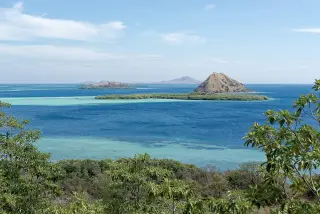
Labuan Bajo — PT Mitra Pinasthika Mustika Tbk (MPMX) has launched a community-based coral restoration programme in the waters off Pulau Messah, Pasir Putih village, West Manggarai, planting 500 coral seedlings on 32 metal “spider frame” structures as part of a four-year conservation effort in the buffer zone of Komodo National Park, according to Indonesian media reports and company communications.
The programme, branded MPM Green Action 2026, was formally inaugurated in Pasir Putih on 4 September 2026 following several months of outreach and training with village authorities, community leaders and local fishers that began in April 2026.
Multiple outlets describe the location as a strategic buffer area adjoining Komodo National Park, and note that the initiative followed coordination with the Komodo National Park Office, although they do not publish detailed zoning maps or legal documents clarifying whether the nursery structures are inside the park’s statutory boundary or in adjacent waters under another jurisdiction.
Community training and local stewardship
Media reports state that MPMX has positioned local residents as central actors in the project, with fishers and members of the Pasir Putih Tourism Awareness Group (Pokdarwis) receiving coral nursery training before the first seedlings were installed.
According to these reports, participants were taught how to select viable coral fragments, attach them to spider frames, and monitor growth, with the aim of enabling the community to carry out routine maintenance and observation over the four-year programme period.
MPMX’s sustainability communications, quoted by several outlets, frame the initiative as designed to extend beyond ceremonial planting, supporting biodiversity while strengthening local livelihoods linked to small-scale fisheries and marine tourism in Labuan Bajo and its surrounding islands.
Coverage from regional and national media also cites village representatives expressing support for the project, highlighting expectations that healthier reefs will help protect the coastal environment and create additional economic opportunities as tourism and fishing develop around Pulau Messah.
Project parameters
According to reports on the inauguration, the Messah restoration effort includes clear operational targets for the initial phase.
- MPMX is targeting the transplanting of 500 coral seedlings in the Pulau Messah waters.
- The fragments are being placed on 32 spider-frame units that serve as artificial structures for reef rehabilitation.
- The programme is designed to run for four years, with ongoing monitoring and community involvement over that period.
- Local fishers and Pokdarwis members have received technical training to carry out coral nursery work and basic monitoring.
Media descriptions emphasise that the company intends to provide continued capacity-building support, although publicly available reports do not detail the specific funding mechanism for long-term maintenance or replacement of frames and coral fragments after the programme ends.
Komodo’s wider marine context
Independent marine tourism and information sites describe Komodo National Park as part of the Coral Triangle, a globally recognised centre of marine biodiversity where nutrient-rich currents support exceptionally high species diversity.
Several of these sources report that the park’s waters host more than 1,000 fish species and around 260 reef-building coral species
Dive operators and conservation guides note that the park’s coral communities provide critical habitat for reef fish, invertebrates and larger megafauna, and underpin the area’s popularity among international divers and snorkellers.
While this biodiversity context helps explain why coral restoration is seen as important near Komodo, the publicly accessible reports on the MPMX programme do not provide site-specific ecological baselines for Pulau Messah, such as past coral cover, causes of degradation or quantified recovery targets.
Governance and boundaries
Articles on the Messah project consistently describe the site as part of a “buffer zone” for Komodo National Park and state that the programme was developed through coordination with the Komodo National Park Office, indicating a degree of institutional engagement.
However, the same reports stop short of clearly defining the legal status of the planting area, and do not specify which agency holds formal authority over permitting, enforcement and long-term management of the restored structures and surrounding waters.
As a result, publicly available information currently allows confirmation of the programme’s launch, scale and community focus, but does not yet establish how responsibilities for monitoring, regulating use of the restored reef and funding any future repairs are divided between the park authority, village government and corporate sponsor.
Sources
- Merdeka.com
- MediaIndonesia.com
- Disway.id
- Otoplasa.com
- Pos-Kupang (Tribun Kupang)
- JawaPos.com
- Suara.com
- KomodoGuide.org – Komodo National Park overview
- DiveConcepts.com – Komodo Marine Diversity
- DiveJournal.co.kr – Diving Spot: Komodo National Park
- Legend Diving Komodo – National Park Adventure
- KomodoDiving
Next story
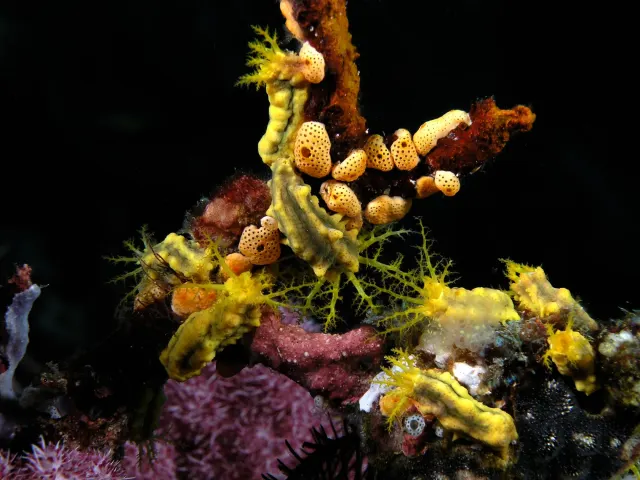
Komodo National Park reefs host more than 1,000 fish species, sources say
Komodo National Park sits inside the Coral Triangle, where UNESCO and WWF say its waters hold more than 1,000 fish species and more than 260 coral spe…
Related