
How wildlife monitoring protects Komodo National Park’s species
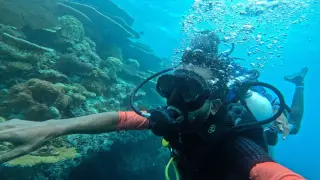
Scientific monitoring in Komodo National Park tracks dragons, manta rays, turtles, reefs and fish through repeated surveys, helping managers measure wildlife and habitat conditions across land and sea.
Editor: Mursyid Sonsang
· 3 min read

Komodo National Park’s wildlife is protected through repeated scientific monitoring rather than sightings alone. Surveys track coral reefs, fish, manta rays, turtles and other marine animals, while terrestrial programmes monitor Komodo dragons and their habitats. The evidence base combines park research, conservation organisations and international biodiversity assessments.
How is wildlife monitored in Komodo National Park?
The park’s monitoring programme includes surveys of species composition, distribution, abundance, occurrence and movement patterns, according to the Komodo National Park Environmental Assessment Study. Its research archive records a cetacean survey conducted in May and October 1999 that logged at least 15 cetacean species during 207 active survey hours over 26 days.
Long-term monitoring also covers coral reefs, fish, grouper and wrasse spawning sites, manta rays, sharks, mangroves, seagrass, sea turtles and cetaceans, according to a conservation-project report held by Biodiversity Links.
How many marine species does the park support?
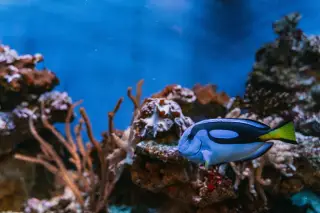
The Wildlife Institute of India’s Komodo National Park profile lists 259 coral species and 1,000 fish species. It also records six whale species, 10 dolphin species, turtles, sharks and manta rays in the marine park.
A review published through the Komodo National Park research site reports 277 animal species living inside the park, including 32 mammal species, 128 bird species and 37 reptile species. Those figures describe different parts of the park’s biodiversity and should not be treated as a single combined total.
How are manta rays and turtles studied?
Manta-ray monitoring has included hydroacoustic tracking, according to the Nature Conservancy’s Komodo marine-conservation project report. The park’s environmental assessment also identifies manta population size, distribution and time spent within the park as monitoring questions.
For sea turtles, the same assessment identifies nesting-beach surveys, nesting rates, turtle numbers and mortality or injury linked to human activity as indicators for management. These measures help managers assess whether conservation actions are protecting turtles that live in or migrate through park waters.
How does monitoring help protect Komodo dragons?
The World Heritage Datasheet for Komodo National Park says the lizard population is regularly monitored at 78 plots. It also records monitoring of terrestrial wildlife by universities and conservation institutions, including surveys of Komodo dragons and other animals.
The value of these programmes is their repeatability: managers can compare observations across locations and years rather than relying only on occasional encounters. For visitors and researchers, that makes the park’s wildlife protection a continuing measurement process as well as a set of rules.
Sources
Read next
More on this story
Travel & Access
What BMKG’s Komodo wave forecast means for boat trips
BMKG forecast moderate waves of more than 1.25 to 2.5 metres in Komodo-area waters on 28–29 September 2026. No high-wave category conditions were fore…
Latest in Wildlife

Today’s top story

Related