

Aftershocks top 8,000 as air operations support remote Flores quake response
Indonesia’s meteorological agency recorded 8,193 aftershocks in Flores by 27 August 2026 following the magnitude 7.7 quake, and disaster officials say air operations are crucial to reaching remote East Manggarai villages, though available…
Editor: Mursyid Sonsang
· Event date: · 4 min read
Labuan Bajo — Indonesia’s disaster agency has confirmed continuing aftershocks and ongoing evacuations from remote parts of Flores following the magnitude 7.7 earthquake that struck East Nusa Tenggara on 15 August 2026, but has not publicly detailed any specific airlift of four patients to a hospital in Labuan Bajo on 27 August.
In an update on seismic activity, the Meteorology, Climatology and Geophysical Agency (BMKG) reported that by 27 August 2026, a total of 8,193 aftershocks had been recorded in Flores and surrounding areas following the main quake. BMKG said the strongest aftershock reached magnitude 6.2, while the smallest were near magnitude 1.0.
Several Indonesian news outlets cited BMKG’s figures, describing sustained seismic activity in East Nusa Tenggara and noting that dozens of the recorded aftershocks had magnitudes above 5.0 and more than a hundred were felt by residents. BMKG has warned that aftershocks can continue for weeks after a major event of this scale, and urged residents to remain vigilant and follow local evacuation guidance.
Earthquake impact and response
The 7.7-magnitude earthquake that struck Flores on 15 August caused significant damage and casualties across parts of East Nusa Tenggara, including East Manggarai Regency. National media, citing disaster management officials, have reported more than 100 fatalities and over a thousand injured in the weeks after the event, as aftershocks continued to affect the region.
Indonesia’s National Agency for Disaster Management (BNPB) has coordinated emergency operations with regional governments, focusing on search and rescue, temporary shelter and the restoration of critical infrastructure. According to statements reported by national broadcasters, BNPB has highlighted the logistical challenges of reaching remote communities in Flores, where damaged roads, landslides and rugged terrain can restrict access for vehicles.
BNPB has also emphasised the role of air operations in delivering relief to isolated villages and transporting injured residents from affected areas to better-equipped towns. Disaster officials have described the use of helicopters to carry food, medical supplies and personnel into locations that are accessible only on foot or by air when roads are blocked.
Remote access in East Manggarai
Remote upland villages in districts such as Lamba Leda in East Manggarai have been repeatedly identified by local authorities as difficult to serve, even in normal conditions, because of steep terrain and limited road networks. In the aftermath of the August earthquake, these constraints have been compounded by damage to existing routes and the risk of landslides, making it harder to move patients and relief items quickly.
Officials and aid providers have used a combination of foot access and air transport to reach isolated communities, according to regional disaster briefings carried by Indonesian media. However, publicly available reports do not specify which individual patients have been evacuated to Labuan Bajo or which medical facilities in the town are receiving referrals from East Manggarai.
Aftershocks and ongoing risk
BMKG’s 27 August update on aftershocks was part of a series of daily and weekly briefings tracking seismic activity in Flores and East Nusa Tenggara. Earlier in the response, BMKG noted that thousands of aftershocks had already been recorded within days of the main event, and cautioned that elevated seismicity could continue for three to four weeks or longer.
Subsequent BMKG summaries indicated that the cumulative number of aftershocks in East Nusa Tenggara surpassed 10,000 by the end of August and continued to rise in early September, with the largest aftershocks remaining at magnitude 6.2. These briefings have been used by both BMKG and BNPB to support public warnings and to inform decisions on evacuation and shelter.
While disaster officials have acknowledged the need for medical referrals from remote parts of Flores, currently available reports do not identify the specific Labuan Bajo hospital that received patients from East Manggarai on 27 August, nor do they provide confirmed details of the number of patients, their conditions or accompanying relatives.
Sources
Next story
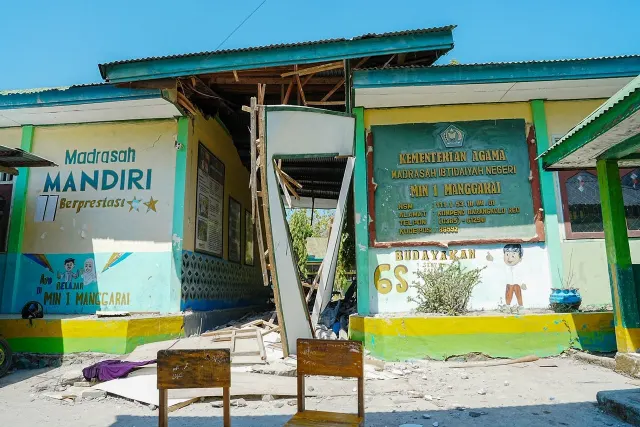
Undana medical teams treat patients in isolated Manggarai villages after quake
Undana said its medical teams treated 40 outpatients in Lehot and up to 200 patients in Bangkaruang as they reached isolated Manggarai communities aft…
Related