

Komodo dragon teeth: why the world’s largest lizard has iron-tipped blades
Komodo dragons have about 60 serrated teeth at a time, and research shows the tips and cutting edges carry an iron-rich coating that helps keep them sharp and resistant to wear.
Editor: Mursyid Sonsang
· 3 min read
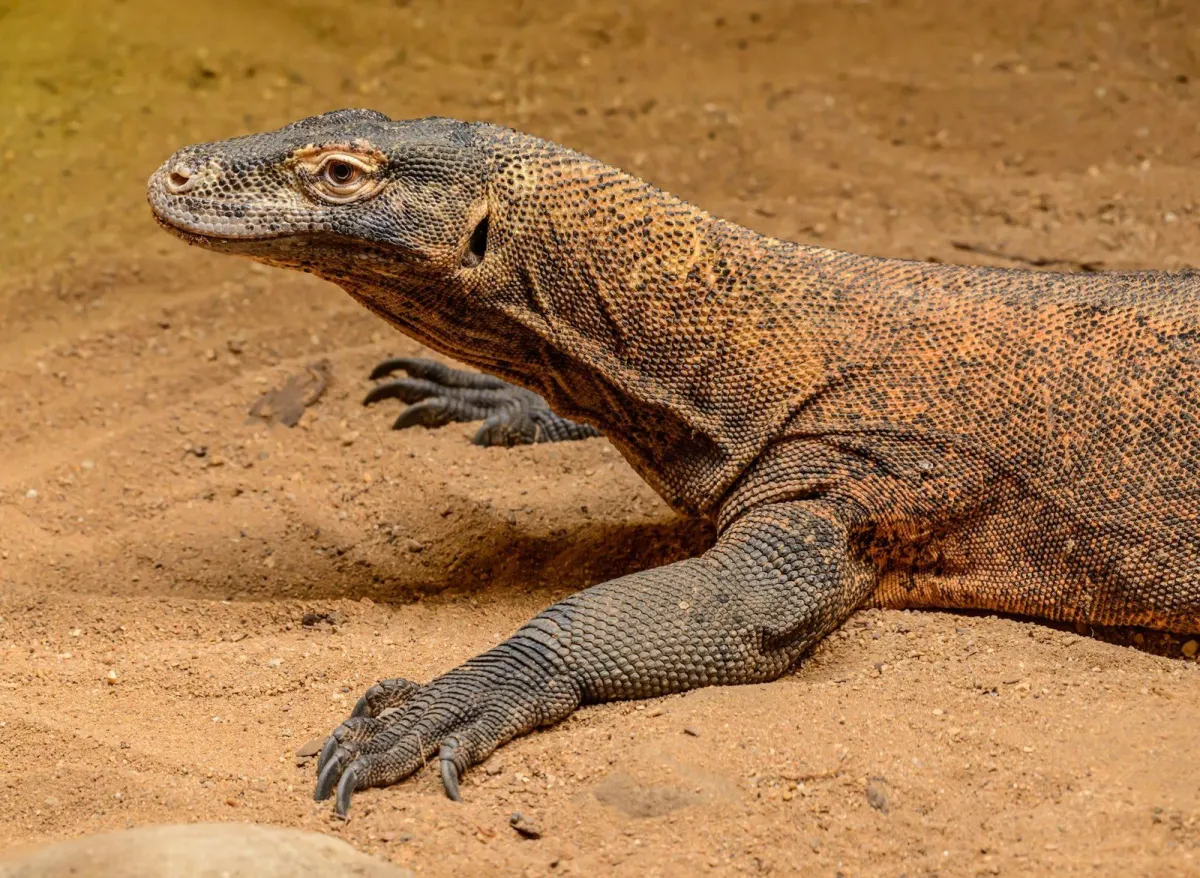
Komodo dragons have about 60 serrated, recurved teeth at a time, and those teeth are built for slicing flesh rather than chewing. Recent research also found that the tips and cutting edges of the teeth carry an iron-rich coating that helps keep them sharp and resistant to wear.
What do Komodo dragon teeth look like?
The teeth are ziphodont, a term for laterally compressed, curved blades with serrated edges, according to a 2024 study in Nature Ecology & Evolution and related scientific summaries. That shape gives Komodo dragons a cutting tool more like a knife than a crushing jaw, which fits their flesh-tearing feeding style.
Smithsonian’s National Zoo describes the teeth as large, curved and serrated, while the academic study says the serrations include both enamel and dentine, making the edge structurally complex rather than simply sharp. The same research found orange pigment on unworn tooth tips and serrations.
How many teeth does a Komodo dragon have?
Adult Komodo dragons carry around 60 teeth at any one time, according to Komodo Guide’s synthesis of the classic field literature and zoo references. Other institutional sources, including Denver Zoo and the Smithsonian, also describe the species as having roughly 60 serrated teeth.
The exact count can vary by individual, age and which teeth are being replaced. What matters biologically is that the species maintains a full working set through continuous tooth replacement.
Why are the teeth orange or iron-coated?
A 2024 study reported that the tooth tips and serrations of Varanus komodoensis are coated with an iron-enriched layer, identified as ferrihydrite. In plain terms, the iron is concentrated where the teeth do the most work: the cutting edges.
Natural History Museum says this iron-rich enamel helps strengthen the teeth and slow wear, while Science News and Science describe it as a protective coating on the serrated edges. The colour seen on the teeth is therefore not rust from the outside, but iron incorporated during tooth development.
Do Komodo dragons replace broken teeth?
Yes. Komodo dragons are polyphyodont, meaning they replace teeth throughout life, and the new teeth erupt as older ones are shed. Komodo Guide and zoo fact sheets describe this as a continuous process that keeps the jaw functional despite heavy wear from tearing prey.
This replacement system matters because Komodo dragons feed by biting and pulling flesh, not by chewing it. Their tooth design and replacement cycle are part of the same predatory toolkit.
Why does this matter for how they hunt?
The teeth help Komodo dragons grip, slice and rip apart prey such as deer and other large animals, matching the species’ puncture-and-pull feeding style described in the scientific literature. The iron-coated cutting edges appear to preserve that slicing function over time.
For readers in and around Komodo National Park, the key point is that the dragon’s famous bite is not just about size. Its teeth are a specialised, constantly renewed cutting system, and the newly described iron layer shows that the species’ jaws are even more finely adapted than long assumed.
Sources
Read next
More on this story
Komodo National Park
Baby Komodo dragon: size, diet, and why hatchlings live in trees
Baby Komodo dragons are not miniature adults. They hatch after about 7–8 months, measure roughly 30–40 cm, weigh about 80–100 grams, and spend their e…
Today’s top story

Related