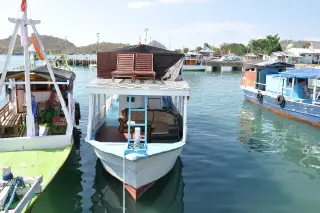

World Bank’s 1986 appraisal linked Flores tuna prospects to cold chain
A 1986 World Bank appraisal for Indonesia’s Fisheries Support Services Project highlighted inadequate tuna processing and marketing services in Flores.
By Pandi Muktar
Editor: Mursyid Sonsang
· Event date: · 5 min read
Labuan Bajo — A World Bank appraisal completed in late 1986 flagged weak tuna processing and marketing services in Flores, linking the island’s fisheries prospects to the development of cold storage, ice production and transport infrastructure. Guidance from the Food and Agriculture Organization shows that a reliable cold chain — from landing and cooling through storage and distribution — remains central to protecting the value of fish catches.
The World Bank’s Fisheries Support Services Project appraisal for Indonesia described “strengthening marketing support services for marine fisheries” as a core component, including specific investments for Flores. It noted that shrimp processing and marketing were adequate in South and Southeast Sulawesi and Aceh, but “the same is not true for tuna in Flores”, and proposed credit to a private fish processor to establish a 500‑ton cold store, a brine freezer and an ice plant, each with a capacity of 30 tons per day.
The facilities were to be owned and operated by P.T. Bali Raya and used to transport frozen skipjack to a cannery in Bali.
The appraisal states that construction of the Flores marketing facilities had already begun and that the project would cover second‑phase work expected to start around October 1986. It estimated the cost of strengthening marketing support services in Flores at about Rp 2.0 billion, or US$1.2 million. A separate World Bank summary of the proposed loan for the Fisheries Support Services Project confirms that the overall programme was intended to increase high‑value shrimp production and improve marketing support services for marine fisheries nationwide.
Cold chain as part of the product
FAO’s guidance on cold storage in fish value chains defines an integrated cold chain as a sequence of stages: packing and cooling of fresh products, food processing such as freezing, cold storage, temperature‑controlled distribution and refrigerated marketing at wholesale, retail and food service outlets. Each segment depends on the one before it, meaning that rapid cooling after landing, appropriate freezing, stable cold‑store temperatures and refrigerated transport all contribute to final quality.
Technical FAO material on freezing and cold stores stresses that storage temperature strongly affects the practical storage life of fish products. Tables compiled from the International Institute of Refrigeration show, for example, that fatty fish stored at −18°C may keep quality for around five months, while storage at −24°C or −30°C can extend that period beyond nine or twelve months.
Similar figures for lean fish indicate that colder, stable temperatures are needed for long‑term storage. These data refer to frozen products; they do not provide a direct safe‑storage duration for freshly landed tuna held on ice.
FAO documents also describe how temperature fluctuations, biochemical changes and dehydration can damage frozen fish during storage, reducing market value. Repeated thawing and refreezing can cause physical damage to the flesh, while excessive dehydration (“freezer burn”) can make products less acceptable to buyers. As a result, FAO recommends rigidly maintaining chill temperatures below 5°C and frozen product temperatures below −18°C throughout storage and distribution.
Flores: infrastructure and income
The World Bank appraisal treated tuna marketing support services in Flores as an infrastructure issue rather than a secondary concern, tying credit for cold stores and ice plants to broader fisheries development. By design, the cold store and ice plant capacities were intended to support the freezing and shipment of skipjack and other tuna from Flores to processing facilities elsewhere.
More recent field reporting from West Flores underscores how cold‑chain gaps can affect small‑scale fishers. A survey of fisheries resources noted that two ice plants and associated cold storage capacity near Labuan Bajo were not operating at the time of the visit, with combined cold‑store capacity of around 120 tons and potential production of 400 ice blocks of 25 kg each per day.
The same report observed that there was no independent ice factory in Labuan Bajo for small fishers, who relied on ice produced in domestic freezers, while larger‑scale ice production at a mini‑plant north of the town was idle during the survey.
These findings illustrate how infrastructure conditions shape income: if ice and cold storage are unavailable or unreliable, fishers may have to sell quickly to local buyers, reducing their ability to meet higher quality standards or negotiate better prices. According to FAO, maintaining low and stable temperatures, preventing dehydration and avoiding repeated thawing are essential to preserving the value of frozen fish, so cold‑chain weaknesses can turn otherwise valuable catches into lower‑grade products.
Linking the 1986 appraisal to present‑day guidance, the policy challenge in Flores is not only to expand facilities, but to ensure that landing sites, ice production, cold‑room capacity and refrigerated transport operate as a coherent chain with dependable energy supply and clear access for local fishers. Without that, investments in individual cold stores or ice plants are unlikely to deliver the full benefits that the World Bank originally envisaged for tuna marketing and processing on the island.
Sources
Next story

Wuring Father and Son Found Adrift After Losing Contact on Selayar Voyage
Two Wuring fishermen reported missing en route from Sikka to Karumpa Island in South Sulawesi’s Selayar Islands were found alive adrift between Sukun…
Related