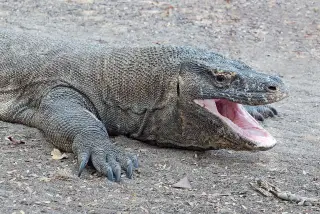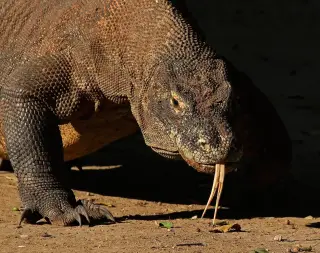

Komodo dragon next to human: what the park record says
Komodo dragons usually avoid people, but they can still injure or kill humans if cornered, threatened or approached too closely. Park records from 1974-2012 logged 24 attacks and five fatalities.
Editor: Mursyid Sonsang
· 3 min read

Komodo dragons usually avoid people, but they can injure or kill a human if they feel cornered, threatened or if an encounter happens at very close range. In Komodo National Park, recorded attacks on humans were rare: park authorities reported 24 attacks between 1974 and 2012, and five were fatal.
Do Komodo dragons attack humans?
Yes, but rarely. Smithsonian’s National Zoo says Komodo dragons can deliver a fatal attack, while the Wikipedia summary of Komodo National Park’s attack record says the species generally avoids humans and that most incidents were defensive rather than predatory.
That distinction matters for readers in Labuan Bajo and the park: the animal is not normally seeking people out, but it is still a large predator with a dangerous bite.
How close can a person get?
Wild Komodo dragons usually retreat from humans, and younger animals are especially shy. The Wikipedia summary says juveniles may flee when a person comes within about 100 metres, while older dragons also withdraw from shorter distances.
If a dragon is cornered, that same source says it may gape, hiss, swing its tail, and then bite if further disturbed.
What makes them dangerous to humans?
They are the largest living lizards, and Smithsonian’s National Zoo notes that they are one of the few lizards with a venomous bite. Britannica also describes the Komodo dragon as capable of running swiftly and occasionally attacking and killing human beings.
For visitors, the practical risk is highest when people leave ranger-controlled areas, approach too closely, or surprise an animal at rest or near food.
What does the park’s attack record show?
The most-cited park figure comes from Komodo National Park data spanning 1974 to 2012: 24 reported attacks on humans and five fatalities. That record is widely repeated in reference sources and remains the clearest published summary in the material reviewed here.
The pattern behind those cases is important: the animal’s danger is real, but attacks are exceptional relative to the number of people who visit the park and see dragons under ranger supervision.
What should readers understand from a “dragon next to human” image?
Photo or video of a Komodo dragon standing near a person can look extraordinary, but proximity alone does not mean the animal is tame. The species can tolerate nearby humans for short periods, yet it remains capable of rapid aggression if stressed, trapped or provoked.
In other words, the image shows coexistence under control only when the human keeps distance and the dragon has space to move away.
Sources
Read next
More on this story
Marine & Diving
Komodo diving currents: how to read forecasts and site warnings
Komodo’s dive sites are governed by tide-linked currents that can produce drift, down-current and surge conditions. Official forecasts and site guidan…
Latest in Komodo National Park
Today’s top story

Related