
How Komodo’s reef monitoring explains currents and coral recovery
Komodo’s reefs are not a single uniform habitat: official monitoring covers 185 sites, while strong tidal currents shape both the park’s productive waters and the difficulty of coral recovery.
By Pandi Muktar
Editor: Mursyid Sonsang
· 3 min read
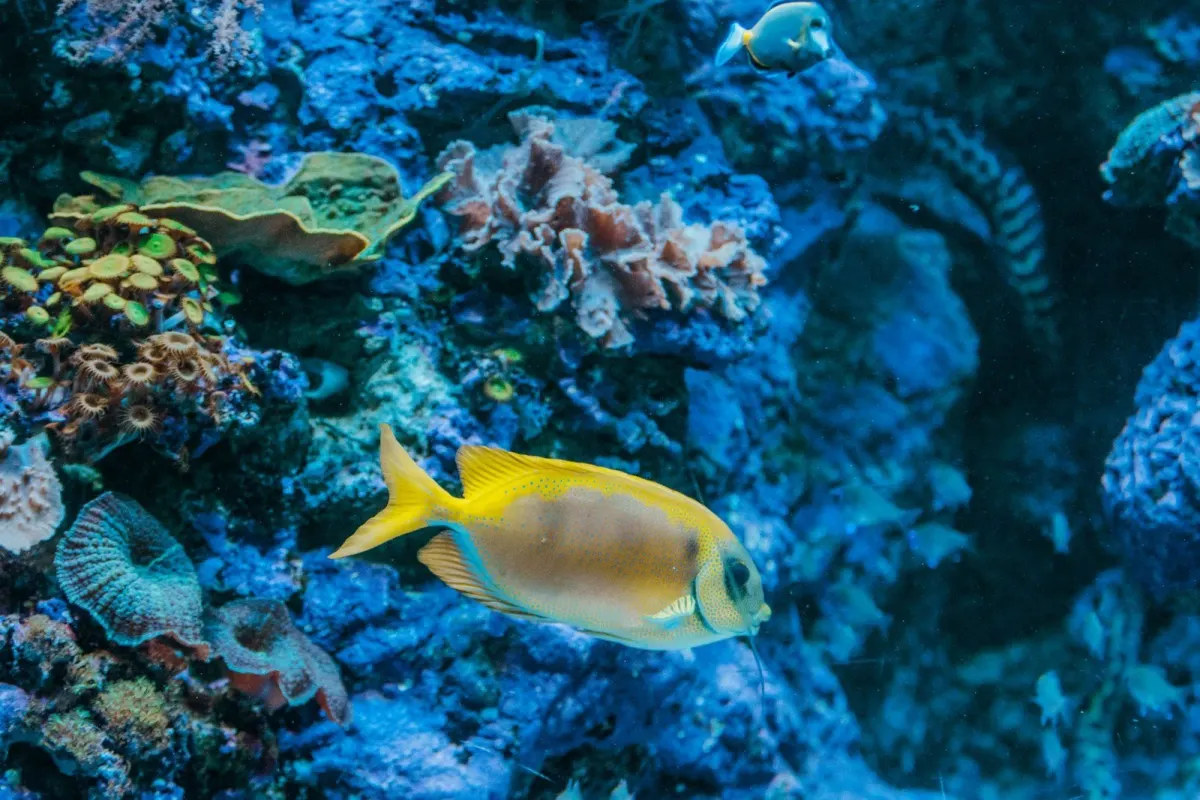
Komodo National Park’s reefs are monitored through a long-running programme that surveys 185 sites every two years, using observations at 4, 8 and 12 metres. The method records live hard coral, dead hard coral, soft coral and other seabed categories, while strong tidal currents help explain both the park’s marine productivity and the difficulty of reef recovery.
How are Komodo’s reefs monitored?
The park’s monitoring programme covers 185 reef sites and repeats the survey every two years, according to Komodo National Park’s monitoring page, updated in 2026. Observers work by snorkelling at 4 metres and scuba diving at 8 metres and 12 metres.
At each depth, the survey makes five observations. Each observation lasts four minutes, after which the observer estimates the share of four habitat categories: live hard coral, dead hard coral, soft coral and other cover such as rock, sand, sponges, algae and anemones.
What does the evidence say about reef condition?
The park says overall destruction of coral reefs in and around Komodo appeared to have stopped as of 1996, followed by slow recovery of 2% in hard-coral cover per year, according to its monitoring page, updated in 2026. That is a historical trend reported by the park, not a current condition score for every reef.
A peer-reviewed study held by the Institut Pertanian Bogor repository describes the first two surveys, in 1996 and 1998. It found significant increases in live coral cover in some regions and a significant decline in hard-coral mortality, especially in areas close to park management and protection activity, according to the study published in 2010.
Why do currents matter to diving and reef management?
Strong tidal currents flow through the Sape Strait and contribute to high oxygenation and upwelling around the park, according to the UNEP World Heritage datasheet, updated in 2026. The same currents that support productive marine waters can make conditions challenging for divers and for coral rehabilitation.
Komodo National Park’s monitoring material notes that damaged areas are commonly found where strong currents coincide with the absence of hard substrate. A rehabilitation report hosted by the park also says strong tidal currents can move rubble, bury living coral or undercut it, making blasted reefs difficult to restore.
Does one reef figure describe the whole park?
No. The monitoring design samples many sites, depths and regions, so results can vary substantially across the park. The IPB repository study says the programme is intended to show kilometre-scale variation in coral cover and provide information relevant to marine-park management.
For divers, the evidence therefore supports a site-specific reading of reef condition rather than treating Komodo as a single uniform underwater habitat. Reef health and current exposure can differ between locations, while the official monitoring programme supplies the framework for tracking change over time.
Sources
Read next
More on this story
Islands & Spots
Komodo National Park access: what the 2026 quota trial changed
A 2026 quota trial and the SiOra reservation system are changing how access to Komodo National Park is managed, but the published 1,000-person limit w…
Latest in Marine & Diving
Related